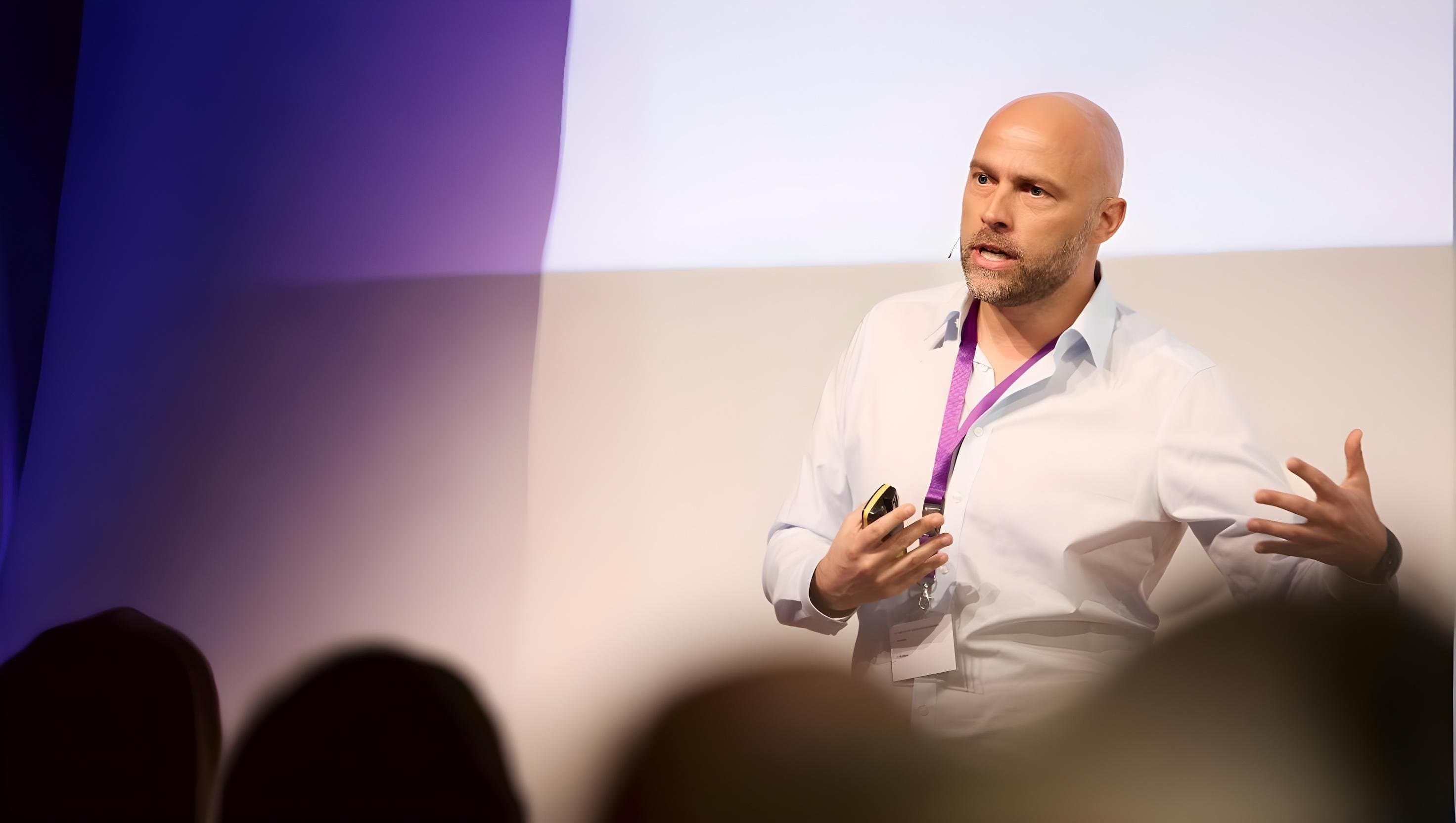
 AI-retouched
AI Speaker & AI Transformation – from Keynote to Implementation
Keynotes, AI workshops and consulting for companies in Germany, the DACH region and across Europe.
About Sascha Sambale
Clear guidance and hands-on implementation in artificial intelligence – on stage, in workshops and in projects.
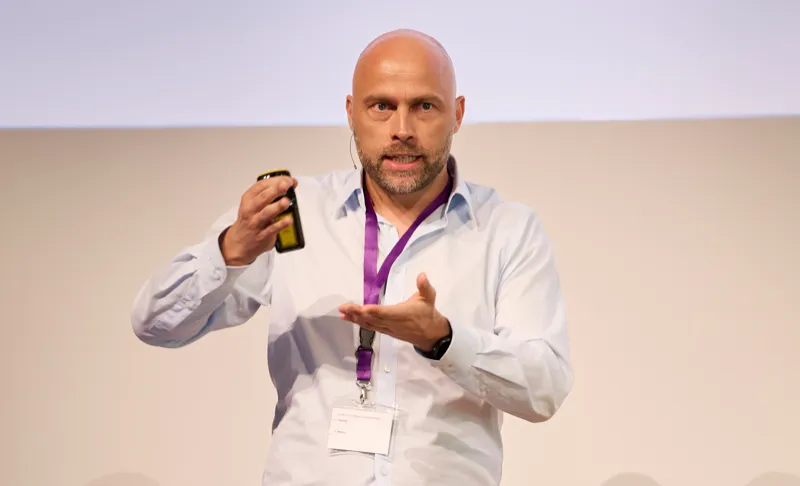
Sascha Sambale (Dipl.-Ing.) is the founder and managing director of SygentiQ GmbH and lives in Bretzfeld near Heilbronn, Germany. He gives AI keynotes, runs workshops and delivers AI projects – for executives, business units and engineering teams. He draws on almost two decades of international technology work, most recently as Global Lead for Generative AI at Robert Bosch GmbH. There he helped shape the global GenAI strategy and supported business units in introducing generative AI successfully and compliantly. Today he turns that experience into decisions that management and IT can make and implement together – from mid-sized companies to global enterprises.
At a time when generative AI, Large Language Models (LLMs), RAG, AI agents, and open-weight models are transforming markets and processes, companies need more than buzzwords. They need a robust AI strategy, a realistic roadmap, and a clear path to implementation. Sascha Sambale delivers exactly that: He translates AI potential into measurable business value and technically viable solutions. He answers the critical questions around ROI, security, data privacy, governance, the EU AI Act, architecture, and change management – and guides teams from AI potential assessment and use-case prioritization through RAG, AI agents, or Private AI to production-ready implementation.
Background
Since 2025
Founder & Managing Director · SygentiQ GmbH
AI keynotes, workshops, consulting and implementation.
2023–2025
Global Lead Generative AI
Robert Bosch GmbH
2018–2023
Tech Lead, Conversational AI
Robert Bosch GmbH
2013–2018
Tech Lead Global Websites
Robert Bosch GmbH
2007–2013
Global Senior Consultant
IBM
LinkedIn Followers
Global Appearances
Years of Experience
Inspired Listeners
Keynote and workshop topics
Keynotes and workshops on the topics companies are dealing with today – each tailored to audience, industry and maturity.
From AI potential assessment to a robust AI roadmap: the starting point for SMEs, mid-sized companies and large enterprises that want to systematically introduce or scale artificial intelligence. Sascha Sambale connects AI maturity, use cases, ROI, governance, architecture, and change management into an actionable plan – instead of producing isolated technology experiments.
Digital employees with clear boundaries: AI agents plan and complete multi-step tasks, use tools, and work with company data. This keynote or workshop shows how autonomous AI agents and multi-agent systems work inside a company, which business use cases actually pay off, and when RPA or deterministic automation remains the better solution.
From first workflow to production-ready AI automation: this hands-on workshop shows how companies build robust processes with n8n, integrate LLMs and AI agents, and connect APIs, data, and custom code. It also gives an honest comparison of n8n with Make and Zapier – including self-hosting, governance, and enterprise requirements.
What do companies, including SMEs, need to know about the EU AI Act? This keynote or workshop translates AI regulation, GDPR, and Responsible AI into concrete tasks: AI inventory, roles and risk classification, AI literacy, transparency, human oversight, data privacy, and governance – practical for German companies and the DACH region.
Become the answer, not just a result: Search is shifting from ten blue links to a single AI-generated answer. Google shows an AI Overview above the results for many queries, and ChatGPT or Perplexity answer questions directly – people get the answer without having to visit a website. This keynote or workshop shows executives and marketing teams how Generative Engine Optimization (GEO) works, and how to make sure your brand is the one AI systems cite.
AI inspiration: an inspirational talk that makes the possibilities of modern AI tangible. From AI-generated images and videos to humanoid robots – this session opens the view to the near future and sparks ideas for how these technologies can reshape entire industries. The focus is less on strategy and more on awakening imagination.
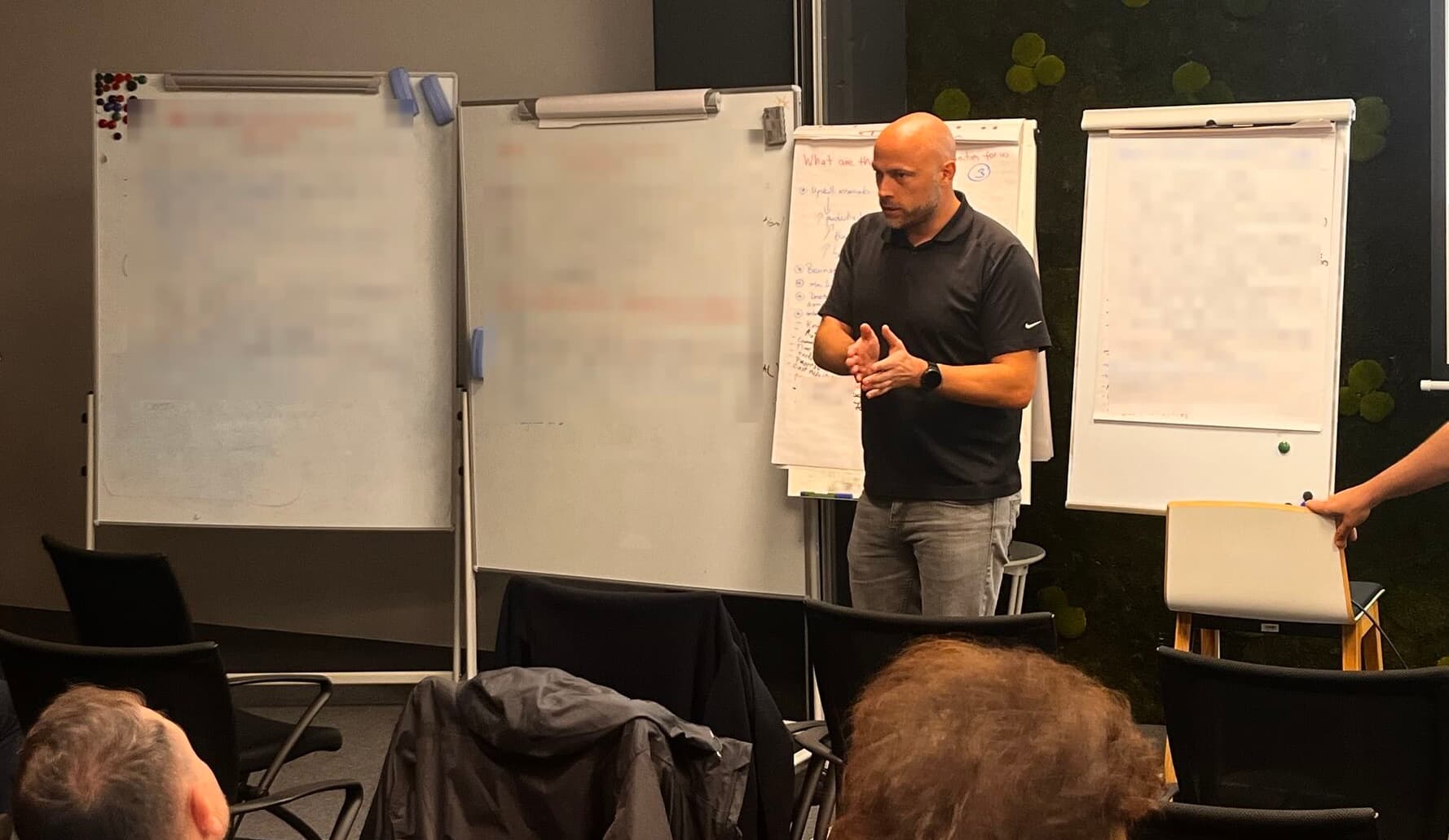
Formats: keynotes, workshops & consulting
From a talk on stage to a production AI system: the formats at a glance.
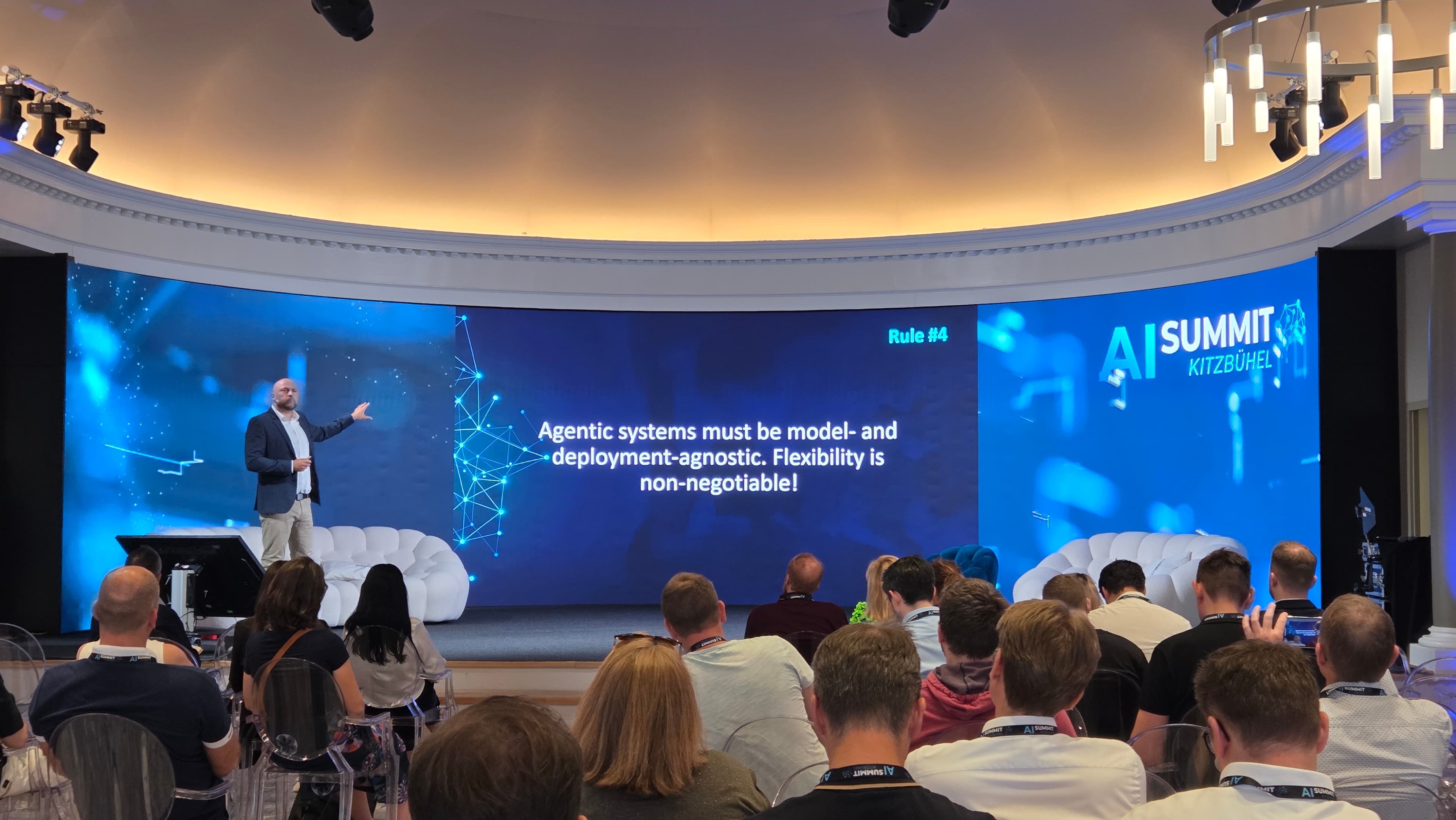
 AI-generated
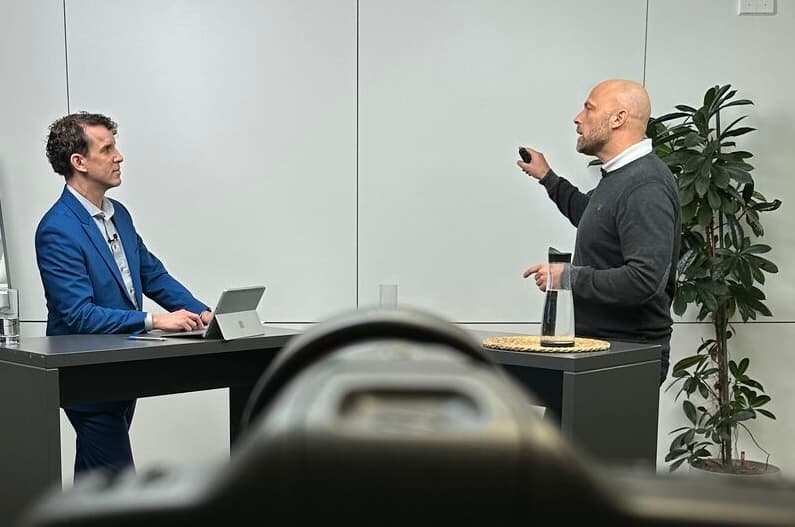
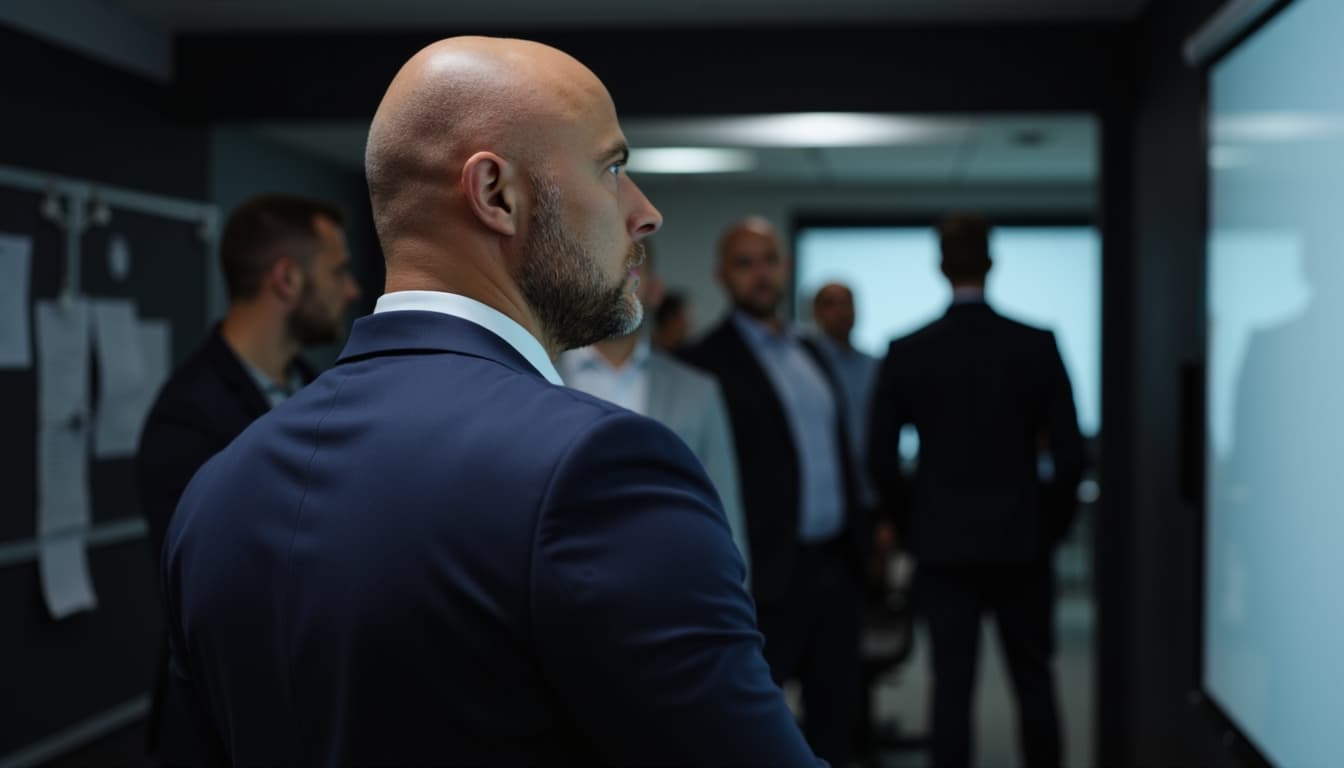 AI-generated
Selected public appearances
- KI Palooza 2026· Stuttgart
- CCH Tagetik DACH inTouch 2026· Munich
- KI Palooza 2025· Esslingen
- Bosch Connected World 2024· Berlin
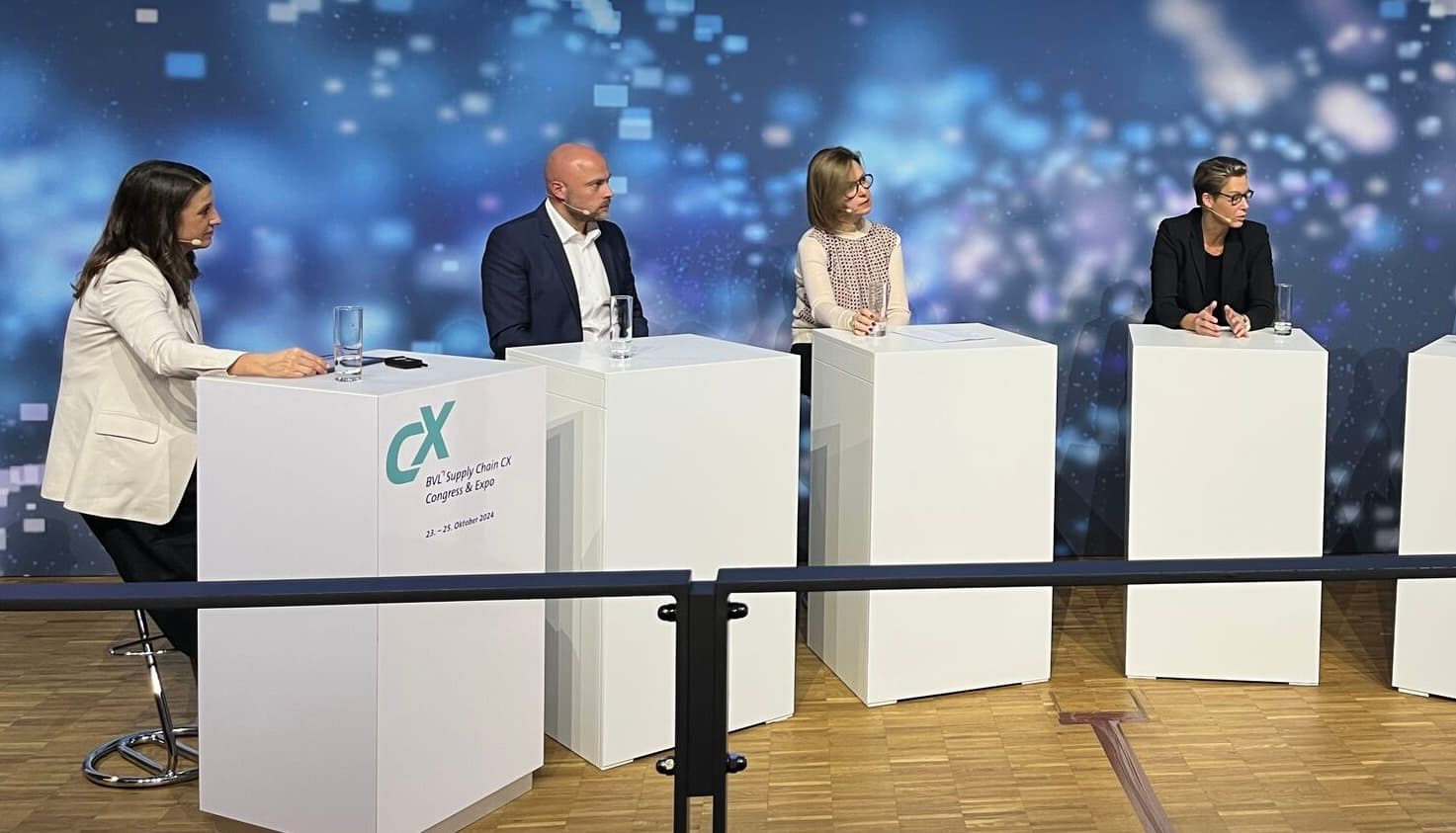
- BVL Supply Chain CX 2024· Berlin
- EHI Technology Days 2024· Bonn
- AI Summit 2024· Kitzbühel
Public appearances by Sascha Sambale: KI Palooza in Stuttgart (2026), CCH Tagetik DACH inTouch in Munich (2026), KI Palooza in Esslingen (2025), Bosch Connected World in Berlin (2024), BVL Supply Chain CX in Berlin (2024), EHI Technology Days in Bonn (2024), and AI Summit in Kitzbühel (2024). A selection of public conferences. Most keynotes and workshops take place internally at companies – some of them under NDA.
References & Feedback
What industry leaders say about working with Sascha.
Makes complex topics tangible and engaging.
Sascha has the rare talent of making complex topics not only understandable, but truly engaging. As a passionate consultant, he supports AI adoption with tailored solutions while remaining authentic and approachable.

You simply love listening to him.
I have now seen Sascha live twice as a keynote speaker at B2B events on AI and IT that I hosted, and was thrilled both times. His keynotes are up to date, tailored to the audience and full of laughs. His talk on the ROI of AI agents went down brilliantly with experts.

A speaker of exceptional caliber.
Sascha combines deep expertise with a professional mindset. He values the insights of others, and his ability to engage, adapt, and refine his approach sets him apart as a speaker of exceptional caliber.
A true game-changer.
I worked with Sascha for several years and value him as a doer. He is one of the leading minds in Germany for e-commerce and GenAI. His experience, combined with his expertise, makes him a true game-changer. I highly recommend him for results-oriented implementation.

AI & ethics: complex topics made accessible.
Sascha’s talk on AI and ethics was outstanding. His presentation was clear, engaging, and full of strong examples. He made complex topics accessible and interesting. Highly recommended!
The exchange on AI and the on-camera work: a great success.
I always greatly enjoy working with Sascha and exchanging ideas about AI. Our joint on-camera work for our end customers was also a great success.
A standout voice in his field.
Sascha is an inspiring and engaging speaker with a visionary mindset in GenAI and digital transformation. His ability to convey complex ideas with energy and clarity makes him a standout voice in his field.

The bridge between practice and theory.
During a C-level discussion, Sascha shared valuable insights into AI and bridged the gap between practical experience and theory. His contribution gave the discussion real depth and provided strong value for the audience.

Not just a speaker, but a partner.
Sascha consistently delivers impactful, actionable insights that influence our strategic decisions. His expertise is indispensable to our projects. He is not just a speaker, but a partner who helps us execute successfully.

Important in guiding our management.
Sascha played an important role in guiding our leadership team through the next phase of our transformation. He highlighted the risks and opportunities of AI and helped align its successful integration into our portfolio with our goals.

Frequently asked questions about AI keynotes, AI consulting and implementation
Short, practical answers – from the first potential assessment to ROI, AI agents, the EU AI Act and the GDPR.
Who is Sascha Sambale?
Sascha Sambale is an AI keynote speaker and AI consultant from Bretzfeld near Heilbronn, Germany. He holds a German engineering diploma (Dipl.-Ing.), founded SygentiQ GmbH and is the former Global Lead for Generative AI at Robert Bosch GmbH. He gives keynotes and workshops and supports companies from AI strategy to technical implementation – in English and German, regionally, across the DACH region and internationally. Focus areas are AI strategy and roadmaps, use-case and ROI prioritization, AI agents, RAG and Private AI, the EU AI Act and AI governance, automation with n8n, and Generative Engine Optimization (GEO).
What makes these AI keynotes and AI consulting different?
Sascha Sambale combines three perspectives that companies rarely get from one source when it comes to AI: enterprise transformation, genuine technical depth, and clear communication for management and the stage. As former Global Lead for Generative AI at Robert Bosch GmbH, he knows the organizational reality behind AI adoption – executive alignment, use-case prioritization, governance, architecture, adoption, operations, and scaling. At the same time, as a computer scientist he can go down to implementation level: LLMs, RAG, AI agents, open-weight models, Private AI, model selection, fine-tuning, APIs, and automation. For mid-sized companies, this combination is especially relevant, because strategy, workshops, and technical pilots should not happen in silos. Executives at Mercedes-Benz, BSH Home Appliances, Microsoft, Bechtle, Körber Supply Chain, and Bosch describe exactly this combination of substance, clarity, and implementation in their public references.
Which AI topics are available for keynotes and workshops?
The core consists of six topic areas, which can be built as a keynote, workshop, executive briefing, or technical deep dive. (1) AI Strategy and AI Transformation – AI maturity, potential assessment, roadmap, valuable use cases, ROI, and change management. (2) AI Agents and Autonomous Systems – agentic AI, digital employees, multi-agent systems, and AI agents vs. RPA. (3) AI Automation – LLMs, company data, APIs, and workflows with n8n, plus how Make and Zapier fit in. (4) EU AI Act, GDPR, and AI Governance – compliance, AI literacy, AI guidelines, and safe scaling. (5) GEO and AI Visibility – visibility in ChatGPT, Perplexity, Gemini, and Google's AI features. (6) The Future of AI – frontier models, robotics, and emerging capabilities. On the technical side, formats extend to LLM implementation, RAG, open-weight and Private AI architectures, model selection, and custom AI software. The consulting and project formats carry the same topics into implementation: AI Value Discovery Workshops, AI potential assessments, ROI and use-case assessments, AI roadmaps, AI Agent Discovery Sprints, architecture reviews, and implementation projects.
Storytelling keynote or technical deep dive – what is possible?
Both – the level of technical depth is adapted to the audience and the purpose of the event. For executives, leadership teams, and large conference audiences, Sascha Sambale translates developments in generative AI into an accessible narrative around strategy, competition, business models, ROI, AI agents, and the future of work. For technical audiences, the same topics are explored at architecture level: large language models, open-weight models, RAG, AI agents, model selection, fine-tuning, tool integration, workflow automation, data access, and governance. Because his background combines computer science with enterprise AI transformation, a single session can also bridge both perspectives – explaining enough technology for management to make better decisions, while connecting technical choices to business value for engineering and IT teams. Organizers looking for a speaker who covers both worlds usually verify this with a pre-briefing call and two reference recordings, one executive and one technical – a request he explicitly welcomes.
How do you book an AI keynote or AI consulting?
Sascha Sambale is available for conferences, corporate events, executive summits, innovation days, and internal meetings as an AI keynote speaker – and for dedicated AI transformation mandates such as workshops, use-case and ROI assessments, executive briefings, AI architecture reviews, GEO audits, and multi-day transformation blueprints. Transformation engagements typically begin with a low-risk initial format such as an AI Value Discovery Workshop or an AI ROI assessment, so both sides can judge the fit before a larger commitment. Inquiries can be submitted through the contact form – you will usually receive a response within 48 hours, and every engagement includes a pre-briefing call to align content, audience, and objectives.
Which formats are available for AI keynotes, workshops and consulting?
Sascha Sambale can be booked as a keynote (30–90 minutes), short talk (20–30 minutes), workshop (2–8 hours), corporate and AI literacy training (0.5–3 days), executive GenAI briefing (2–3 hours) or AI Value Discovery Workshop (1 day). Consulting formats include the AI potential assessment, the AI ROI and use-case assessment, the Enterprise AI Transformation Blueprint, the AI architecture review, the AI Agent Discovery Sprint, the GEO and AI visibility audit, and custom AI implementation and software projects. Every format is tailored to industry, audience, AI maturity and the desired outcome, and is available in English or German, on site, online or hybrid.
How much does an AI keynote or AI consulting cost?
There are no fixed list prices: the fee depends on format, length, preparation and travel. A one-hour keynote for a regional event has a different scope than a multi-day transformation project for a large corporation. After a short briefing you receive an individual, non-binding quote – requests via the booking form are usually answered within 48 hours.
Are AI keynotes and AI consulting available on site in Heilbronn, Hohenlohe and Stuttgart?
Yes. Sascha Sambale lives in Bretzfeld in Hohenlohe near Heilbronn and is available for AI keynotes, AI workshops, and AI transformation consulting locally in Baden-Württemberg (the Stuttgart, Heilbronn-Franken and Hohenlohe regions, including Heilbronn, Schwäbisch Hall and Öhringen) – as well as across Germany, the DACH region (Germany, Austria, Switzerland), and internationally. Because Bretzfeld sits directly between Heilbronn and Stuttgart, regional engagements can often be arranged at short notice and with lower travel costs than for speakers coming from other parts of Germany. Sessions are delivered in German or English, on-site, online, or hybrid.
How do you spot a good AI keynote speaker in the Heilbronn-Stuttgart region?
A good AI keynote speaker meets three verifiable criteria: hands-on implementation experience rather than speaking experience alone, the ability to address management and technical audiences equally, and traceable references with names and roles. Ask specifically: which AI project was led, in which role and at what scale? Are there references you can check publicly? Does the talk match your audience's maturity? For Sascha Sambale these questions can be answered as follows: as Global Lead for Generative AI at Robert Bosch GmbH he was responsible for introducing generative AI in the group; he gives executive keynotes as well as technical deep dives on AI agents, RAG and LLM architecture; leaders from Mercedes-Benz, Microsoft, BSH, Bechtle, Körber Supply Chain and Bosch, among others, have described working with him (see testimonials). Being based in Bretzfeld between Heilbronn and Stuttgart makes regional on-site dates easy. A short pre-briefing clarifies whether it is a fit.
How do I find an AI keynote speaker who can address both technology and management?
Look for two things: real implementation responsibility and the ability to answer the same question at board level and at architecture level. Six questions make that checkable before booking: (1) Has the speaker introduced AI in an organization – with budget, governance and resistance? (2) Does the answer to a hard technical question (RAG or fine-tuning, agent architecture, cost per token) stay concrete? (3) Are there references from executives and the C-level? (4) Is the same person convincing in both an executive keynote and a technical session? (5) When was the material last updated? (6) Is there a briefing beforehand instead of a standard talk? Sascha Sambale most recently led the introduction of generative AI at Bosch as Global Lead for Generative AI and has a technical background in leading platform and conversational AI work. A briefing to check the fit is part of every booking.
What should I look for when booking an AI keynote speaker?
Look for implementation experience rather than stage buzzwords – an expert audience notices the difference within minutes. Six points are worth checking: (1) Track record: which company, which role, what scope, what went into production – and what failed? (2) Currency: does the material reflect today's models and regulation? (3) Fit: is the talk tailored to industry, hierarchy level and goal? (4) Substance: are costs, risks and governance named – or only possibilities? (5) References from leaders in comparable formats. (6) Follow-up: can the speaker support what the keynote triggers, for example with a workshop, use-case assessment or roadmap? Sascha Sambale connects keynotes with exactly these follow-up formats, so the momentum from the keynote turns into an implementation plan.
Why does real enterprise experience matter for AI speakers and AI consultants?
Because demonstrating an AI tool is far easier than introducing AI successfully inside an organization. Real AI transformation involves executive sponsorship, stakeholder alignment, IT architecture, security, data access, legal requirements, governance, employee adoption, operating models, use-case prioritization, and ultimately the question of whether the investment creates measurable value. Experience with these constraints changes the quality of both strategic advice and a keynote: opportunities can be presented without ignoring the implementation reality behind them. In a market where many claim AI expertise without ever having introduced AI inside a company, verifiable operational responsibility is the most reliable selection criterion available to an organizer or a client. Sascha Sambale brings this perspective from his work as former Global Lead for Generative AI at Robert Bosch GmbH, where generative AI had to hold up across a global corporation rather than in isolated demos. That is what allows him to connect AI vision with the practical questions companies face when they move from experimentation to production.
Are AI workshops and corporate training available?
Yes. Alongside keynotes, Sascha Sambale offers hands-on AI workshops and corporate training for SMEs, mid-sized companies and large enterprises. These include AI strategy and Value Discovery workshops, AI potential assessment, use-case and ROI prioritization, AI agents and multi-agent systems, LLM and RAG fundamentals, AI automation with n8n, as well as Responsible AI, the EU AI Act, GDPR, and AI literacy. For teams that already want to work productively, workshops can lead directly into architecture reviews or implementation sprints. Content is tailored to the company's industry, hierarchy level, technical background, and real business processes; internal AI champions are frequently developed so that knowledge and responsibility remain in the company.
How does an AI potential assessment or AI strategy workshop for a mid-sized company actually work?
An AI potential assessment starts with business problems and processes, not with a list of tools. In a structured workshop, goals, current AI use, and AI maturity are clarified, relevant processes are reviewed, and possible AI use cases are collected. The candidates are then evaluated by business impact, feasibility, data availability, integration effort, risk, and expected ROI. The best use cases are distilled into a prioritized shortlist with next steps attached: required data, architecture concept, ownership, pilot scope, KPIs, and governance. The result is therefore not a collection of ideas, but a first AI roadmap. Sascha Sambale's AI Value Discovery Workshop is designed exactly for this entry point and can lead directly into an ROI assessment, architecture review, or pilot project.
What is an AI transformation consultant and why does my company need one?
An AI transformation consultant connects AI strategy with the reality of organization, technology, and operations. For a mid-sized company, that means finding relevant AI use cases, assessing AI maturity, evaluating potential and ROI, developing a realistic AI roadmap, building governance and change management, and making technical decisions about LLMs, RAG, AI agents, automation, or Private AI. A good AI consultant therefore delivers more than slides – they help turn a handful of prioritized use cases into robust pilots and, subsequently, production-ready solutions. This is exactly what Sascha Sambale specializes in: he brings enterprise AI experience from a global corporation to the faster, leaner decision-making of mid-sized companies.
Besides consulting, is custom AI software development and implementation available?
Yes. Alongside keynotes, workshops, and training, Sascha Sambale also supports companies with concrete AI consulting and technical implementation. This includes architecture and prototyping for RAG and knowledge systems, AI agents, workflow automation, LLM integrations, open-weight and Private AI setups, as well as custom AI software and interfaces to existing systems. A project typically starts with a clear problem definition, potential and ROI assessment, and an architecture decision, before a limited pilot is built. This keeps the investment controllable and adapts the technical solution to the business case, data, security, governance, and existing IT. For mid-sized companies, this is especially helpful when strategy, workshop, and implementation should not be handed off to three separate providers.
How do you develop an AI strategy for a mid-sized company (Mittelstand) or SME?
An AI strategy for a mid-sized company starts with the business goal and the actual AI maturity – not with a tool or model. The proven process has four steps. First, the AI potential assessment: which processes and decisions offer the biggest lever? Second, prioritization: use cases are rated by value, feasibility, data, risk, effort and expected ROI. Third, the roadmap: a few focused pilots, a suitable architecture, governance, ownership and clear KPIs. Fourth, the move into operations with training and change management. SMEs don't need a large AI department for this. An internal AI champion, a clear decision process and two or three flagship use cases usually achieve more than twenty parallel experiments. Strategy workshops produce a prioritized use-case list and a solid draft roadmap.
Where does my company stand on AI? AI maturity model for SMEs and mid-sized companies
An AI maturity model shows where a company stands and which next step makes sense. A practical model has five stages: (1) Exploration – first AI tools, no systematic use. (2) Experimentation – individual pilots, often without KPIs or governance. (3) Operational – selected applications run in production, ownership is clear. (4) Systematic – AI is scaled across several areas with a strategy, clearly defined roles, architecture principles and ROI tracking. (5) Transformative – AI changes products, processes or business models. What matters is not the stage number but the next suitable measure: a company in exploration needs something different from one with several production RAG or agent systems. That is why maturity is the starting point of every potential assessment and roadmap.
Which AI use cases are particularly well suited to SMEs and mid-sized companies?
Good AI use cases in mid-sized companies share three characteristics: they solve a frequent or expensive problem, enough data or context is available, and success can be measured. Typical areas include internal knowledge management with RAG, document and email processing, customer service, sales support, quoting and research processes, reporting, quality and error analysis, software development, and intelligent automation between existing systems. AI agents are particularly well suited to multi-step knowledge work involving tools and unstructured information; rule-based steps are often better served by APIs, RPA, or classic workflows. An AI potential assessment therefore evaluates possible use cases not by wow-factor, but by business impact, feasibility, data situation, risk, integration effort, and ROI. Sascha Sambale applies exactly this approach in Value Discovery workshops and ROI assessments for mid-sized companies.
How can a company introduce AI successfully and scale it beyond individual pilots?
Successful AI adoption shapes three levels at once: business, people and technology. Business: the first use cases need a measured baseline, a realistic business case and clear decision points instead of an open-ended experimentation program. People: AI literacy, clear AI guidelines, leadership communication and training on real tasks decide acceptance and safe use. Technology: depending on the problem, the best solution is a large language model via API, a smaller or open-weight model, RAG on company data, an AI agent, an n8n workflow or conventional software. GDPR, the EU AI Act and information security belong in from day one. Scaling beyond pilots then needs evaluation, monitoring, an operating model, cost control and a roadmap from pilot to production.
Can small and medium-sized companies implement AI successfully without a large AI team?
Yes. Effective AI adoption is no longer limited to corporations with dedicated AI research departments. SMEs can combine existing cloud services, AI APIs, open-weight models, workflow automation platforms, their own company data, and specialized AI agents to solve highly specific business problems without building an expensive AI platform from scratch. The key is to start with a valuable process rather than with the technology: a focused use case with clear data, measurable economics, and one internal owner usually creates more value than a broad experimental AI program. Smaller companies also move faster, because decision paths are shorter and processes are less fragmented. What matters is choosing an architecture, model, and implementation approach that match the company's size, capabilities, security requirements, and expected ROI – instead of copying the AI infrastructure of a global enterprise. This is exactly the setting Sascha Sambale works in outside large corporations: a compact use-case and ROI assessment, a pragmatic architecture and model decision, and enablement for the people who will operate the solution afterwards.
How can AI agents transform business processes?
An AI agent pursues a goal, uses approved tools, runs several steps on its own and hands decisions above its mandate to a human. Among German companies, 86 percent consider agentic AI relevant, but only 0.6 percent have integrated AI systematically across front, core and back office; 47 percent name integration into existing work processes as their most important open task (KPMG Germany, Generative KI in der deutschen Wirtschaft 2026). The gap is organizational, not technological. Every agent starts with two questions: is the process still needed in this form – or would AI only make an outdated workflow faster and more expensive? And in which steps does AI really add value? Many steps are handled more robustly and cheaply by deterministic automation, an API or conventional software. AI belongs in the steps that need language understanding, judgment under ambiguity or unstructured data. Choosing those steps is the core of the AI agents deep dive and the AI Agent Discovery Sprint.
What is the difference between AI agents and RPA (Robotic Process Automation)?
RPA follows a script; an AI agent pursues a goal. An RPA bot clicks through interfaces, copies data between systems and repeats the same sequence every time. As long as the process and interfaces stay stable, that is fast, auditable and very cheap per run. An AI agent understands natural language, plans steps itself, uses tools and APIs and adapts to intermediate results. It shines where RPA fails: judgment, context and unstructured data. Most processes contain both. Handing everything to an agent means paying too much per run; leaving everything with RPA wastes the most valuable automation potential. The right architecture combines rule-based automation for standard steps with AI agents for the steps involving language and ambiguity.
How do you create AI guidelines and AI literacy training for employees?
Good AI guidelines are short enough to be read in everyday work and concrete enough to enable decisions. They should specify which AI tools are approved, what data may be entered, which use cases require additional review, when human control is required, and who decides in cases of uncertainty. AI literacy is needed alongside this: employees should understand how generative AI fundamentally works, where hallucinations and bias arise, how confidential or personal data is protected, and how to check results for accuracy. The best training works with real tasks from the company instead of generic prompt examples. Sascha Sambale connects AI guidelines, Responsible AI, and hands-on corporate training so that compliance and productive use don't work against each other.
What do German companies and SMEs need to consider under the EU AI Act?
The first step is an AI inventory: which AI systems and models are used where, for what, with which data and by whom? Then the role (provider or deployer) and risk category of each application are determined and the obligations derived – from AI literacy of staff (Art. 4, softened by the 2026 amendment but still a sensible basis for safe AI use) and transparency obligations (Art. 50, since 2 August 2026) to risk management and documentation for high-risk systems. Regulation (EU) 2026/1744, in force since 27 July 2026, postponed the high-risk deadlines: Annex III applies from 2 December 2027, Annex I from 2 August 2028. From 2 December 2026, two new prohibitions apply (non-consensual intimate imagery and child sexual abuse material). Prohibited practices can be fined up to €35 million or 7 percent of worldwide annual turnover (Art. 99); for SMEs, the lower of the two amounts applies. The GDPR remains relevant in parallel, so a joint AI governance framework makes sense. Sources: Reg. (EU) 2024/1689, Reg. (EU) 2026/1744.
How do you calculate the ROI of AI projects and justify AI investments?
ROI = (financial benefit minus total investment) divided by total investment – calculated against a measured baseline, not against assumed productivity gains. The benefit comes from shorter processing times, lower cost per case, more revenue, higher quality or fewer errors. Success, however, is usually decided on the investment side: integration, data preparation, training, operations, human review – and two items that are often underestimated. First, model selection: using a top model for a task a smaller model handles equally well multiplies costs over millions of runs. Second, governance: it costs money, but having no governance costs money too – it belongs in the TCO from day one. Two factors make the case robust: the baseline before the pilot and the adoption rate, because an assistant used by 30 percent of the team delivers only about 30 percent of the benefit. Rule of thumb: a use case without a measurable baseline is not an ROI case but a learning case. And: measure business outcomes, not AI activity.
What is Sascha Sambale's professional background?
Sascha Sambale (Dipl.-Ing.) is the founder and managing director of SygentiQ GmbH. From 2023 to 2025 he was Global Lead for Generative AI at Robert Bosch GmbH: he helped shape the global GenAI strategy and supported business units in introducing generative AI successfully and compliantly. Before that he was technically responsible for Bosch's global Conversational AI platform (2018–2023) and its global websites such as bosch.com and bosch.de (2013–2018). His career started in 2007 as a Global Senior Consultant at IBM. Technically his background ranges from software and platform architecture to LLMs, RAG, AI agents and Private AI; on the transformation side from AI strategy and ROI to governance and the EU AI Act. That is why he can work on the same question with the board and the engineering team.
How do you implement Large Language Models and generative AI in the Mittelstand?
An LLM implementation in the Mittelstand doesn't start with the question of which model is most powerful, but with the task, quality requirements, data, integrations, data privacy, and cost. For general knowledge work, a secure enterprise API can be the simplest solution. For company knowledge, Retrieval-Augmented Generation (RAG) is often added. For sensitive data, predictable load, or more control, open-weight models in a private cloud or on-premises can make sense. If the system needs to use tools independently and execute multiple steps, it becomes an agent or workflow problem; for stable processes, classic automation often remains more robust. Production adoption also requires evaluation, access controls, logging, monitoring, cost tracking, governance, and a clear owner. Sascha Sambale supports architecture and model selection, RAG design, agent and automation patterns, and the path from proof of concept to operations.
How do I use artificial intelligence in a GDPR-compliant way in my company?
GDPR-compliant AI use starts with the specific use case and the data it processes. Clarify which personal or confidential data is involved, on which legal basis, through which providers and sub-processors, where it is stored and whether it is reused for training. The key building blocks are data minimization, role and permission concepts, data processing agreements, deletion rules, transparency and, where needed, a data protection impact assessment. Technically, an enterprise cloud solution can be enough depending on the protection needs; for particularly sensitive data, open-weight models, Private AI or on-premises operation are options. RAG makes company knowledge usable without training the model on it, but does not replace a permission concept. The obligations of the EU AI Act apply in addition. A short AI guideline for employees turns all this into everyday practice.
When does an open-source or open-weight LLM on-premises make sense for a company?
An open-source LLM, or open-weight model, or Private AI setup does not automatically pay off just because data is sensitive. The decision should weigh protection needs, model quality, required control, latency, utilization, operational competence, and total cost of ownership. On-premises or a dedicated private cloud can make sense when data must not leave the controlled environment, usage is very high or predictable, special integrations are required, or a company deliberately wants to operate the model and infrastructure independently. Cloud APIs, by contrast, are often faster to launch and more economical for small or fluctuating volumes. Open-weight also does not automatically mean GDPR-compliant: permissions, logging, data handling, updates, and secure administration remain necessary. In architecture reviews, Sascha Sambale therefore compares cloud, Private AI, and on-premises based on the concrete use case rather than ideological preference.
How does a RAG implementation with company data work?
Retrieval-Augmented Generation (RAG) connects a Large Language Model with current, internal company knowledge. Documents and other knowledge sources are prepared, given metadata and permissions, and indexed so that the most relevant information for a question is found first. Only this content is then passed to the LLM as context for the answer. This allows answers to be grounded in internal sources, kept up to date, and provided with source citations – without retraining the base model on every document. Real quality doesn't come from a vector database alone: data preparation, chunking, metadata, hybrid retrieval, re-ranking, the permission model, evaluation, and feedback loops are what matter. Sascha Sambale supports companies with RAG architecture, model and database selection, security design, and production integration into existing applications and processes.
What is Generative Engine Optimization (GEO), and how is it different from SEO?
Generative Engine Optimization (GEO) makes a company, brand or person understandable, trustworthy and citable for AI answer systems such as ChatGPT, Perplexity, Claude, Gemini and Google's AI Overviews. SEO optimizes for a position in a list of links; GEO optimizes for becoming part of the answer. Both build on the same foundations: crawlable, fast pages, clean internal linking and structured data (schema.org/JSON-LD) that reflects exactly what is visible. GEO adds weight to clear entity signals, consistent information in highly weighted sources such as LinkedIn, Wikipedia, YouTube and the press, and passages that fully answer a question on their own. For AI systems outside Google Search, crawler permissions and llms.txt can also be used; Google itself says llms.txt has no proven effect on Search or AI Overviews. GEO does not replace SEO – it requires a technically sound website.
How do companies become visible in ChatGPT, Perplexity and Google AI Overviews?
Through Generative Engine Optimization (GEO). Sascha Sambale helps companies and personal brands improve their AI search visibility. The objective is not simply to rank another web page, but to make a company understandable, trustworthy, and citable for AI systems generating answers about relevant products, services, expertise, or industries. A GEO analysis can cover AI crawler accessibility, technical website structure, schema.org and JSON-LD structured data, entity consistency, semantic content architecture, question-and-answer coverage, source authority, citability, brand signals, and the relationship between traditional SEO and AI search. The resulting recommendations range from technical website improvements to entirely new content structures built around the questions customers increasingly ask ChatGPT, Perplexity, Gemini, and Google AI Overviews. This website is the working example: its AI crawler access, llms.txt, structured data, and answer-first content were built with the same framework, which is available as a keynote for marketing and leadership teams or as a hands-on GEO audit with implementation support.
Book Sascha Sambale
Looking for an AI speaker for your conference, an AI workshop for your team or support with your AI transformation? Briefly describe your plans – you will receive a reply within 48 hours.
Booking Information
Based in
74626 Bretzfeld, Germany
Availability
Bookings are currently accepted 2 to 8 months in advance.
Duration
- Keynotes: 30 to 90 min.
- Workshops: 2 to 8 hours
- Training: 0.5 to 3 days
- Projects: scope-dependent
Audience
From board meetings to conferences with more than 1,000 participants.
Note
To help us respond quickly, please include details on the format (online or on-site), budget, venue, expected number of participants, and target audience.