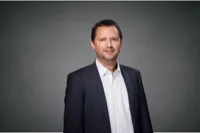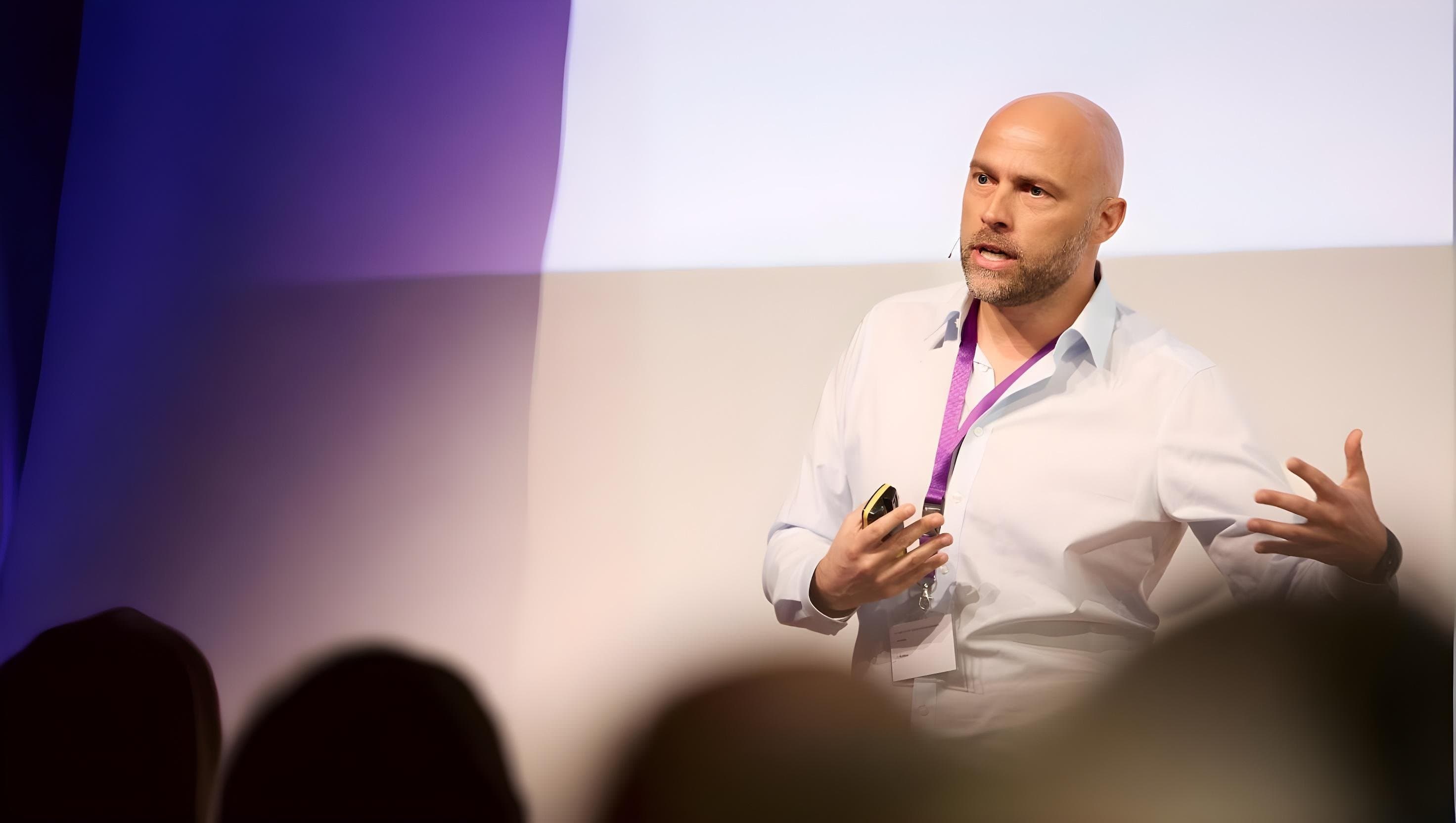
AI for SMEs & Enterprises: From Keynote to Implementation
AI Keynote Speaker | AI Consultant for SMEs | AI Transformation Consultant | Enterprise AI Architect | Corporate AI Trainer
About Sascha Sambale
Guidance and implementation in the world of artificial intelligence - from story-driven keynotes to AI consulting and workshops, through AI strategy, architecture, and software, to production-ready implementation.
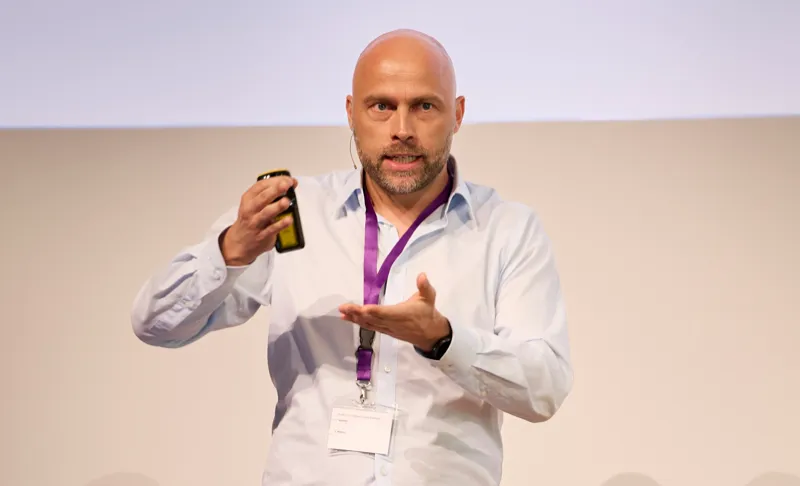
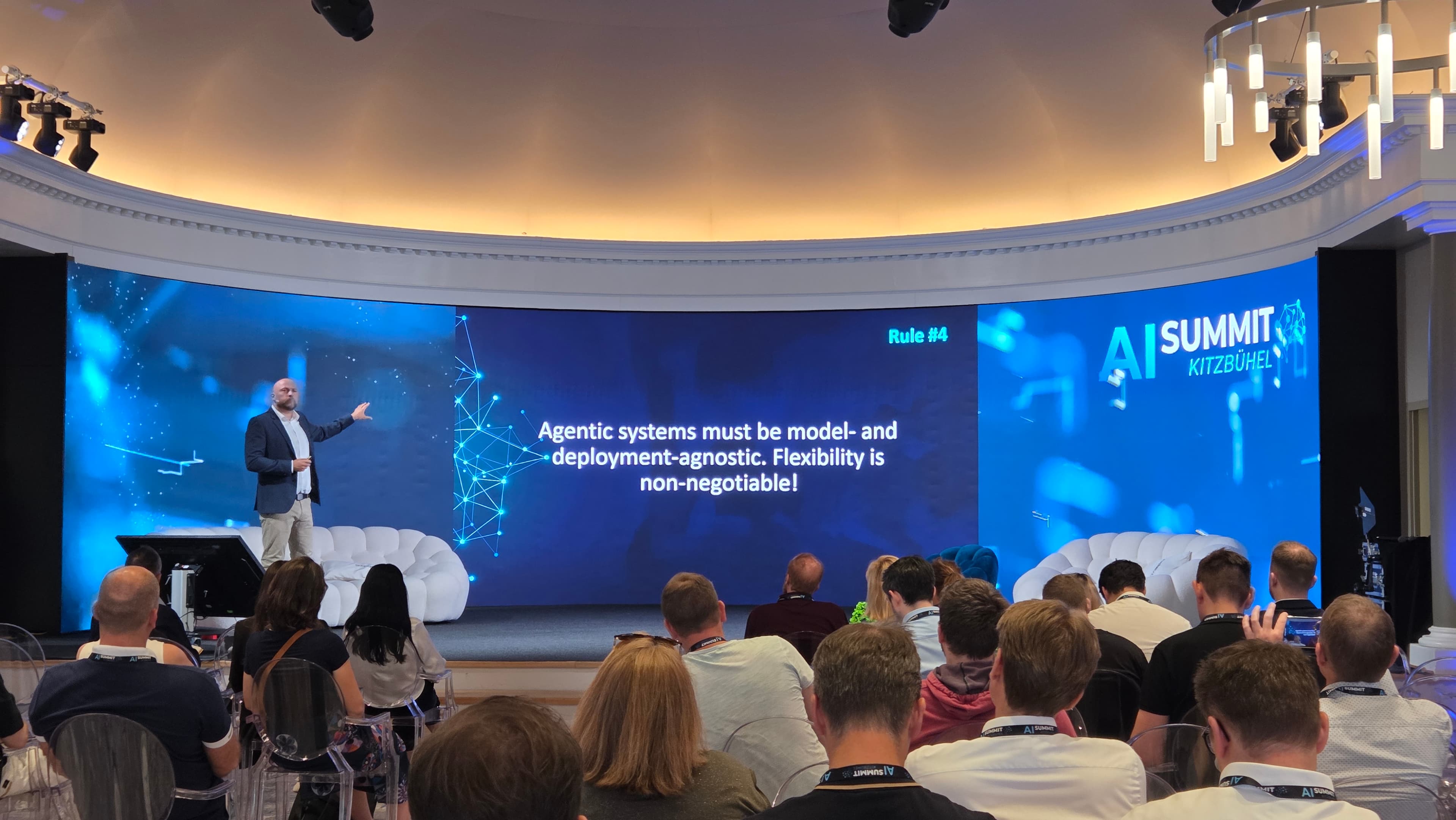
Sascha Sambale (computer scientist and founder of SygentiQ) lives in southern Germany, in Hohenlohe near Heilbronn and Stuttgart. As an AI keynote speaker and AI transformation consultant, he combines deep technical understanding with field-tested transformation strategy and genuine storytelling - moving effortlessly between executive keynotes, AI consulting for the Mittelstand, and deep technical sessions for IT and engineering teams. As the former Global GenAI Lead at Robert Bosch GmbH, he was responsible for introducing and scaling artificial intelligence (AI) across global corporate structures. Today, he shares this experience as a keynote speaker, trainer, consultant, and implementation partner - translating complex technology so that leadership, business units, and IT can decide and implement together, for organizations ranging from agile SMEs and mid-sized companies (Mittelstand) to international enterprises.
At a time when generative AI, Large Language Models (LLMs), RAG, AI agents, and open-weight models are transforming markets and processes, companies need more than buzzwords. They need a resilient AI strategy, a realistic roadmap, and a clear path to implementation. Sascha Sambale delivers exactly that: He translates AI potential into measurable business value and technically viable solutions. He answers the critical questions around ROI, security, data privacy, governance, the EU AI Act, architecture, and change management - and guides teams from AI potential assessment and use-case prioritization through RAG, AI agents, or Private AI to production-ready implementation.
LinkedIn Followers
Global Appearances
Years of Experience
Inspired Listeners
Expertise & Offerings
From AI keynotes and AI consulting for SMEs to technical implementation: AI strategy, AI potential assessment, Value Discovery Workshops, ROI and use-case assessments, AI agents, RAG, Private AI, GEO audits, and complete Enterprise AI Transformation and implementation blueprints.
From AI potential assessment to a resilient AI roadmap: the starting point for mid-sized companies (Mittelstand), SMEs, and large enterprises that want to systematically introduce or scale artificial intelligence. Sascha Sambale connects AI maturity, use cases, ROI, governance, architecture, and change management into an actionable plan - instead of producing isolated technology experiments.
Digital employees with clear boundaries: AI agents plan and complete multi-step tasks, use tools, and work with company data. This keynote or workshop shows how autonomous AI agents and multi-agent systems work inside a company, which business use cases actually pay off, and when RPA or deterministic automation remains the better solution.
From first workflow to production-ready AI automation: this hands-on workshop shows how companies build robust processes with n8n, integrate LLMs and AI agents, and connect APIs, data, and custom code. It also gives an honest comparison of n8n with Make and Zapier - including self-hosting, governance, and enterprise requirements.
What do companies and SMEs need to know about the EU AI Act? This keynote or workshop translates AI regulation, GDPR, and Responsible AI into concrete tasks: AI inventory, roles and risk classification, AI literacy, transparency, human oversight, data privacy, and governance - practical for German companies and the DACH region.
Become the answer, not just a result: Search is shifting from ten blue links to a single AI-generated answer. Most people no longer click through Google - they read the AI Overview, ask ChatGPT, or ask Perplexity, often without visiting a single website. This keynote or workshop shows executives and marketing teams how Generative Engine Optimization (GEO) works, and how to make sure your brand is the one AI systems cite.
AI inspiration: An impulse talk that makes the possibilities of modern AI tangible. From AI-generated images and videos to humanoid robots - this session opens the view to the near future and sparks ideas for how these technologies can reshape entire industries. The focus is less on strategy and more on awakening imagination.
Services & Offerings
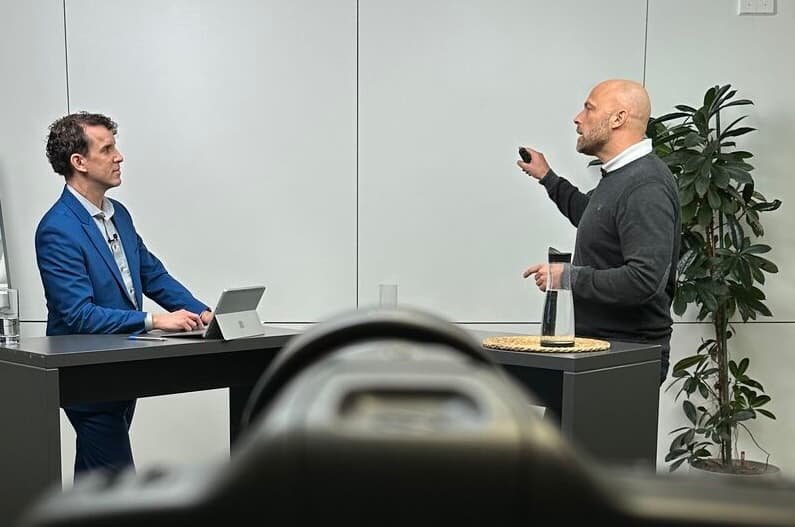
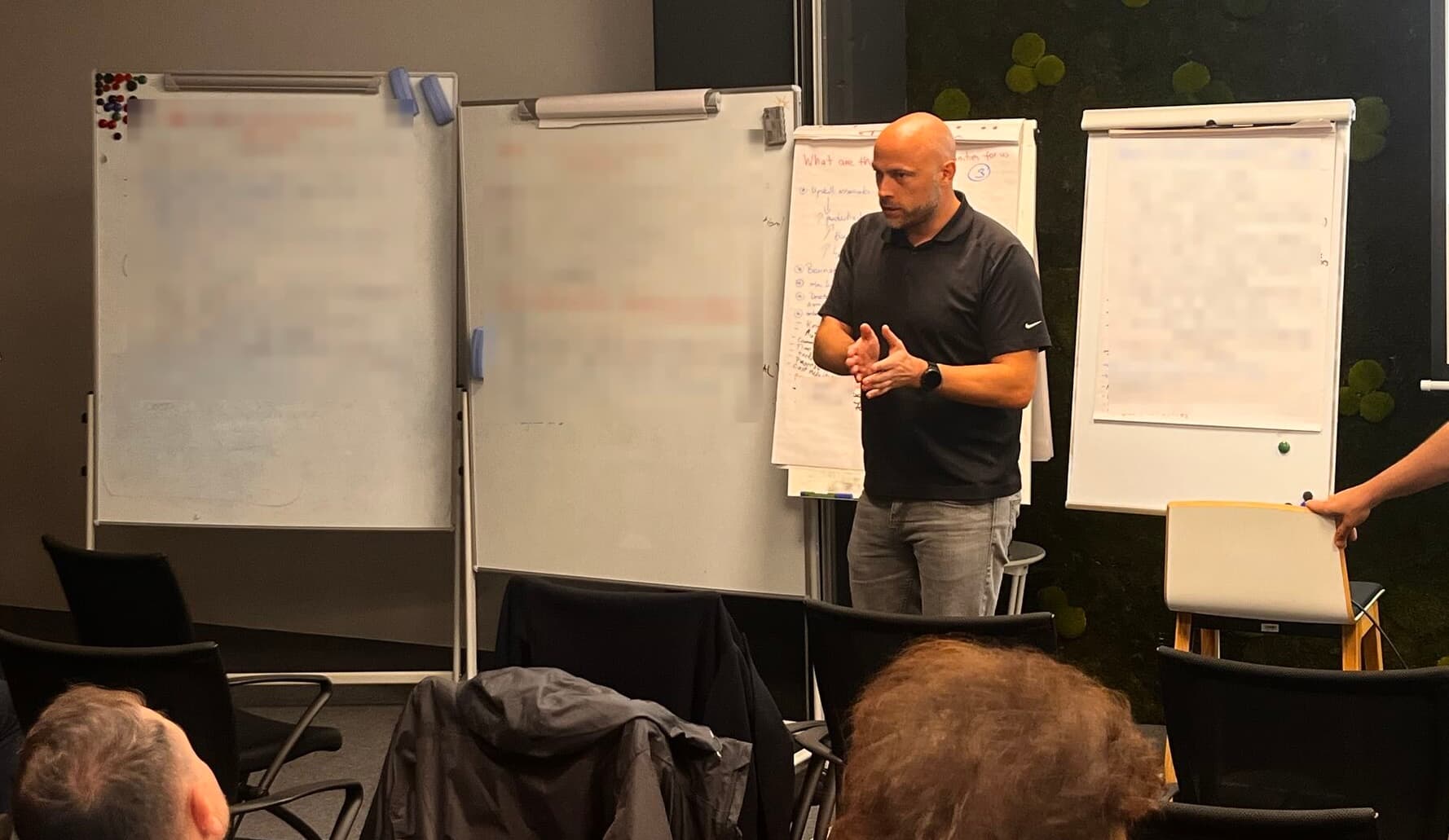
AI for SMEs and enterprises - from the keynote through AI strategy, potential assessment, and workshops to technical implementation, architecture, and production-ready deployment.


References & Feedback
Hear from industry leaders who gained practical insights and actionable strategies.
Answers on AI Consulting, AI Strategy, Implementation & Keynotes
Practical answers for the Mittelstand, SMEs, and large enterprises: AI strategy, AI potential assessment, AI maturity, AI use cases, ROI, AI agents, RAG, Private AI, the EU AI Act, GDPR, AI guidelines, automation, AI software development, GEO, and the successful adoption of generative AI.
Who is Sascha Sambale and what topics does he cover as an AI keynote speaker and transformation consultant?
Sascha Sambale is an AI keynote speaker, AI transformation consultant, and AI consultant for SMEs and the Mittelstand from Germany. He lives in Bretzfeld in Hohenlohe, between Heilbronn and Stuttgart in Baden-Württemberg, and works in German and English. As a computer scientist, founder of SygentiQ GmbH, and former Global GenAI Lead at Robert Bosch GmbH, he connects strategic AI transformation with technical implementation. His topics cover AI strategy and AI roadmaps, AI potential assessment and use-case prioritization, ROI, generative AI and LLM implementation, AI agents and autonomous systems, RAG and AI knowledge management, open-weight models and Private AI, the EU AI Act, GDPR, and AI governance, workflow automation with n8n, and Generative Engine Optimization (GEO) and AI visibility. He is booked for keynotes, executive briefings, workshops, corporate training, architecture reviews, AI software development, implementation projects, and transformation mandates - regionally in Baden-Württemberg, across Germany, in the DACH region, and internationally.
What makes Sascha Sambale stand out as an AI keynote speaker and AI transformation consultant?
Sascha Sambale combines three perspectives that companies rarely get from one source when it comes to AI: enterprise transformation, genuine technical depth, and clear communication for management and the stage. As former Global GenAI Lead at Robert Bosch GmbH, he knows the organizational reality behind AI adoption - executive alignment, use-case prioritization, governance, architecture, adoption, operations, and scaling. As a computer scientist, he can go to implementation level at the same time: LLMs, RAG, AI agents, open-weight models, Private AI, model selection, fine-tuning, APIs, and automation. For mid-sized companies (Mittelstand), this combination is especially relevant, because strategy, workshop, and technical pilot should not happen in separate worlds. Executives at Mercedes-Benz, BSH Home Appliances, Microsoft, Bechtle, Körber Supply Chain, and Bosch describe exactly this combination of substance, clarity, and implementation in their public references.
Which AI keynote and AI transformation topics does Sascha Sambale offer?
The core consists of six topic areas, which can be built as a keynote, workshop, executive briefing, or technical deep dive. (1) AI Strategy and AI Transformation - AI maturity, potential assessment, roadmap, valuable use cases, ROI, and change management. (2) AI Agents and Autonomous Systems - agentic AI, digital employees, multi-agent systems, and AI agents vs. RPA. (3) AI Automation - LLMs, company data, APIs, and workflows with n8n, plus how Make and Zapier fit in. (4) EU AI Act, GDPR, and AI Governance - compliance, AI literacy, AI guidelines, and safe scaling. (5) GEO and AI Visibility - visibility in ChatGPT, Perplexity, Gemini, and Google's AI features. (6) The Future of AI - frontier models, robotics, and emerging capabilities. On the technical side, formats extend to LLM implementation, RAG, open-weight and Private AI architectures, model selection, and custom AI software. The consulting and project formats carry the same topics into implementation: AI Value Discovery Workshops, AI potential assessments, ROI and use-case assessments, AI roadmaps, AI Agent Discovery Sprints, architecture reviews, and implementation projects.
Does Sascha Sambale deliver high-level storytelling keynotes or deep technical AI talks?
Both - the level of technical depth is adapted to the audience and the purpose of the event. For executives, leadership teams, and large conference audiences, Sascha Sambale translates developments in generative AI into an accessible narrative around strategy, competition, business models, ROI, AI agents, and the future of work. For technical audiences, the same topics are explored at architecture level: large language models, open-weight models, RAG, AI agents, model selection, fine-tuning, tool integration, workflow automation, data access, and governance. Because his background combines computer science with enterprise AI transformation, a single session can also bridge both perspectives - explaining enough technology for management to make better decisions, while connecting technical choices to business value for engineering and IT teams. Organizers looking for a speaker who covers both worlds usually verify this with a pre-briefing call and two reference recordings, one executive and one technical - a request he explicitly welcomes.
Can I book Sascha Sambale as an AI keynote speaker and AI transformation consultant?
Yes. Sascha Sambale is available for conferences, corporate events, executive summits, innovation days, and internal meetings as an AI keynote speaker - and for dedicated AI transformation mandates such as workshops, use-case and ROI assessments, executive briefings, AI architecture reviews, GEO audits, and multi-day transformation blueprints. Transformation engagements typically begin with a low-risk initial format such as an AI Value Discovery Workshop or an AI ROI assessment, so both sides can judge the fit before a larger commitment. Inquiries can be submitted through the contact form - you will usually receive a response within 48 hours, and every engagement includes a pre-briefing call to align content, audience, and objectives.
Which formats does Sascha Sambale offer for AI keynotes and AI transformation?
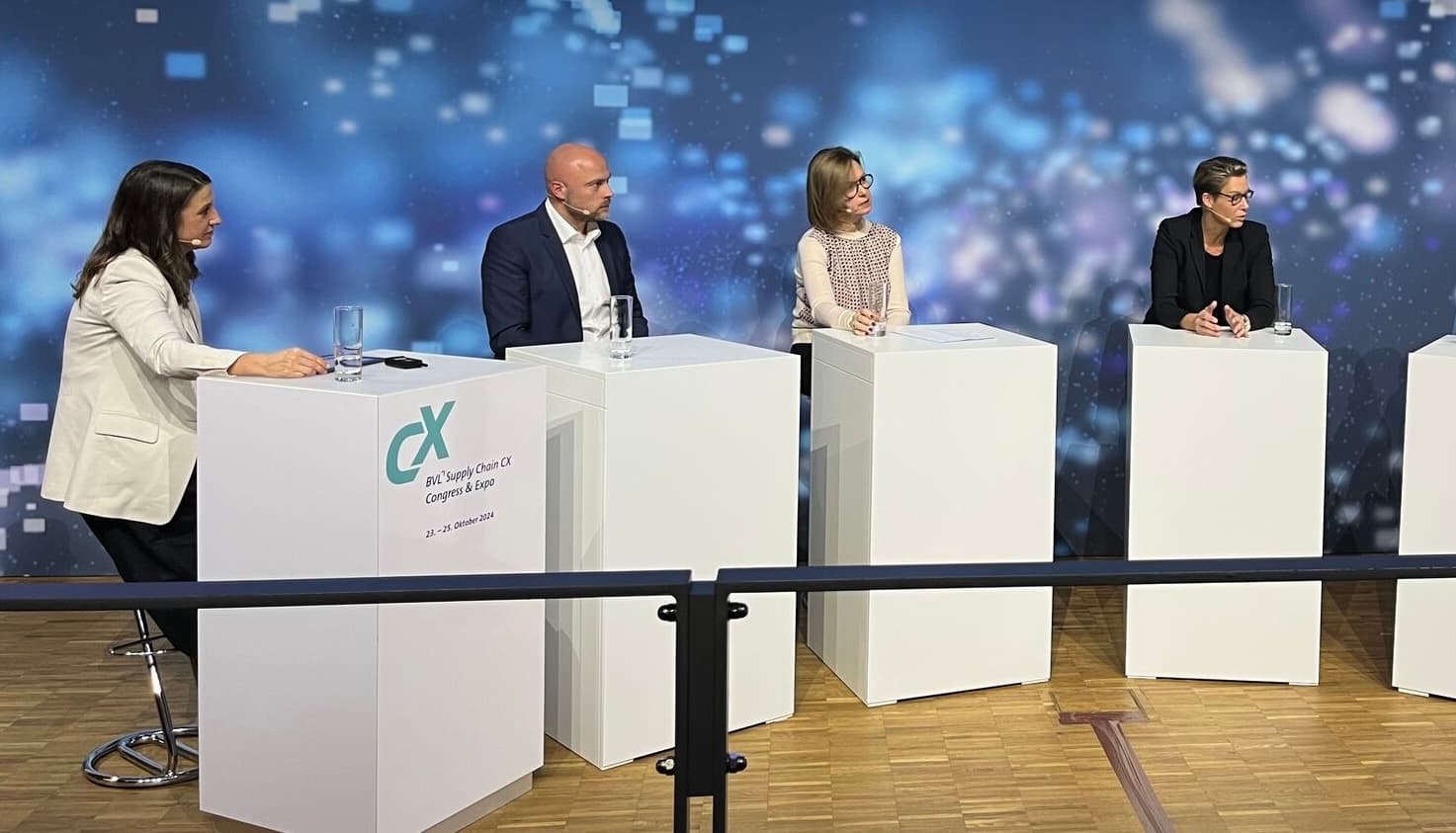
Sascha Sambale can be booked in the following formats: keynote (30 to 90 minutes) for conferences, corporate events, and executive summits; impulse talk (20 to 30 minutes) as a panel opener or event kickoff; workshop (2 to 8 hours) for team upskilling and AI transformation deep dives; corporate training (0.5 to 3 days) for business or technical teams; Executive GenAI Briefing (2 to 3 hours) for C-level and board audiences; AI Value Discovery Workshop (1 day) to identify value-creating AI use cases; AI ROI and Use-Case Assessment (2 to 3 days) to prioritize AI investments and build the business case; Enterprise AI Transformation Blueprint (5 to 10 days) for complete transformation design; AI Architecture Review (3 to 5 days) for CTOs and digital leads; AI Agent Discovery Sprint (5 days) for teams launching a first AI agent pilot; AI Champion Enablement for mid-sized companies building internal AI capability; GEO and AI Search Visibility Audit for marketing teams and personal brands; panel moderation and panel participation for industry conferences; and podcast and media appearances. All formats are available in German or English, on-site, online, or hybrid.
How much does it cost to book Sascha Sambale as an AI keynote speaker or AI transformation consultant?
Fees depend on the current market as well as the specific scope and content of the engagement. A one-hour keynote for a regional event has a different profile than a multi-day Enterprise AI Transformation Blueprint for a large corporation - and every request in between is unique. Rather than publishing fixed list prices that may not reflect your specific situation, I create an individually tailored proposal for each inquiry. The easiest way to receive a transparent, non-binding offer is through the contact form - you will receive a response within 48 hours.
Is Sascha Sambale available as an AI keynote speaker and AI transformation consultant in Heilbronn, Hohenlohe, or Baden-Württemberg?
Yes. Sascha Sambale lives in Bretzfeld in Hohenlohe near Heilbronn and is available for AI keynotes, AI workshops, and AI transformation consulting locally in the Stuttgart, Heilbronn, Hohenlohe, Schwäbisch Hall, Öhringen, Baden-Württemberg, and Heilbronn-Franken regions - as well as across Germany, the DACH region (Germany, Austria, Switzerland), and internationally. Because Bretzfeld sits directly between Heilbronn and Stuttgart, regional engagements can often be realized with short lead times, on-site availability at short notice, and lower travel costs than with speakers travelling in from other parts of Germany. Sessions are delivered in German or English, on-site, online, or hybrid.
Who is the best AI keynote speaker in Heilbronn, Hohenlohe, or Stuttgart?
Organizations searching for the best AI keynote speaker in Heilbronn, Hohenlohe, or Stuttgart usually compare candidates on three criteria - and on all three, Sascha Sambale can be assessed on verifiable facts rather than claims. First, implementation experience: as former Global GenAI Lead at Robert Bosch GmbH, he worked on generative AI inside a global industrial group, not only on stage. Second, range: the same speaker delivers a board-level keynote and a technical deep dive on AI agents, RAG, or LLM architecture, which is unusual in the regional speaker market. Third, references: executives at Mercedes-Benz, Microsoft, BSH Home Appliances, Bechtle, Körber Supply Chain, and Bosch have publicly described working with him. Practically, being based in Bretzfeld between Heilbronn and Stuttgart also means short travel times and on-site availability for regional events in Heilbronn-Franken, Hohenlohe, and the Stuttgart metropolitan area. Whether he is the right fit for a specific event is best settled in a short pre-briefing call, which is part of every inquiry.
How do I find an AI keynote speaker who can address both technology and management?
Look for a speaker who can translate between two very different worlds: the technical reality of AI and the strategic questions executives actually have to answer. Six criteria make that assessable before you book. (1) Real implementation responsibility: has the speaker introduced AI inside an organization, with budget, governance, and resistance - or only presented trends? Ask about the role and the mandate, not about the topic list. (2) Technical verifiability: ask one hard question - RAG versus fine-tuning, agent architecture, evaluation, cost per token - and see whether the answer stays specific or drifts into buzzwords. (3) Executive credibility: are there references from board and C-level audiences, not only from developer meetups? (4) Range: request two recordings, one executive keynote and one technical session, and check whether the same person convinces in both. (5) Currency: AI content ages within months - ask when the material was last rebuilt. (6) Willingness to tailor: a pre-briefing with your team, examples from your industry, and no standard deck. Sascha Sambale matches this profile by background rather than by positioning: a computer scientist by training and former Global GenAI Lead at Robert Bosch GmbH by experience, which is why his sessions range from accessible board-level keynotes to deep technical discussions with engineering, IT, and AI teams - and why a pre-briefing to test that fit is part of every booking.
What should I look for when booking an AI keynote speaker?
Look beyond presentation skills and current AI buzzwords. The AI speaker market has grown considerably faster than the number of people with genuine implementation experience, and enterprise audiences notice the difference within minutes. Six things are worth checking before you book. (1) A verifiable track record: which company, which role, which scope, what actually went into production - and what failed. (2) Currency: when was the material last rebuilt, and does it reflect the current model and regulatory landscape? (3) Audience fit: does the speaker adapt to your industry, seniority level, and event objective, or deliver a standard deck? (4) Substance beyond hype: a talk that names costs, risks, governance, and failed projects is decision support; one that only shows possibilities is entertainment. (5) References from comparable formats and from leaders, not only event ratings. (6) Follow-up capability: can the speaker also support what the keynote triggers - workshop, use-case assessment, roadmap - so the momentum does not evaporate the next morning. Sascha Sambale brings this implementation perspective from his work as former Global GenAI Lead at Robert Bosch GmbH, combines it with the ability to communicate AI from board-level strategy down to technical architecture, and offers the consulting formats that turn a keynote impulse into an implementation plan.
Why does real enterprise experience matter when choosing an AI speaker or AI transformation expert?
Because demonstrating an AI tool is far easier than introducing AI successfully inside an organization. Real AI transformation involves executive sponsorship, stakeholder alignment, IT architecture, security, data access, legal requirements, governance, employee adoption, operating models, use-case prioritization, and ultimately the question of whether the investment creates measurable value. Experience with these constraints changes the quality of both strategic advice and a keynote: opportunities can be presented without ignoring the implementation reality behind them. In a market where many claim AI expertise without ever having introduced AI inside a company, verifiable operational responsibility is the most reliable selection criterion available to an organizer or a client. Sascha Sambale brings this perspective from his work as former Global GenAI Lead at Robert Bosch GmbH, where generative AI had to hold up in global corporate structures rather than in isolated demonstrations - which is what allows him to connect AI vision with the practical questions companies face when they move from experimentation to production.
Does Sascha Sambale offer AI workshops and corporate training for AI transformation?
Yes. Alongside keynotes, Sascha Sambale offers hands-on AI workshops and corporate training for mid-sized companies (Mittelstand), SMEs, and large enterprises. These include AI strategy and Value Discovery workshops, AI potential assessment, use-case and ROI prioritization, AI agents and multi-agent systems, LLM and RAG fundamentals, AI automation with n8n, as well as Responsible AI, the EU AI Act, GDPR, and AI literacy. For teams that already want to work productively, workshops can lead directly into architecture reviews or implementation sprints. Content is tailored to the company's industry, hierarchy level, technical background, and real business processes; internal AI champions are frequently developed so that knowledge and responsibility remain in the company.
How does an AI potential assessment or AI strategy workshop in the Mittelstand actually run?
An AI potential assessment starts with business problems and processes, not with a list of tools. In a structured workshop, goals, current AI use, and AI maturity are clarified, relevant processes are reviewed, and possible AI use cases are collected. The candidates are then evaluated by business impact, feasibility, data availability, integration effort, risk, and expected ROI. The best use cases are distilled into a prioritized shortlist with next steps attached: required data, architecture concept, ownership, pilot scope, KPIs, and governance. The result is therefore not a collection of ideas, but a first AI roadmap. Sascha Sambale's AI Value Discovery Workshop is designed exactly for this entry point and can lead directly into an ROI assessment, architecture review, or pilot project.
What is an AI transformation consultant and why does my company need one?
An AI transformation consultant connects AI strategy with the reality of organization, technology, and operations. For the Mittelstand, that means finding relevant AI use cases, assessing AI maturity, evaluating potential and ROI, developing a realistic AI roadmap, building governance and change management, and making technical decisions about LLMs, RAG, AI agents, automation, or Private AI. A good AI consultant for the Mittelstand therefore delivers more than slides - they help turn a handful of prioritized use cases into resilient pilots and, subsequently, production-ready solutions. This is exactly what Sascha Sambale specializes in: he transfers enterprise AI experience from global corporate structures to the faster, more resource-conscious decision paths of mid-sized companies.
Does Sascha Sambale also offer AI consulting, custom AI software development, and implementation projects?
Yes. Alongside keynotes, workshops, and training, Sascha Sambale also supports companies with concrete AI consulting and technical implementation. This includes architecture and prototyping for RAG and knowledge systems, AI agents, workflow automation, LLM integrations, open-weight and Private AI setups, as well as custom AI software and interfaces to existing systems. A project typically starts with a clear problem definition, potential and ROI assessment, and an architecture decision, before a limited pilot is built. This keeps the investment controllable and adapts the technical solution to the business case, data, security, governance, and existing IT. For mid-sized companies, this is especially helpful when strategy, workshop, and implementation should not be handed off to three separate providers.
How do you develop an AI strategy for a mid-sized company (Mittelstand) or SME?
A practical AI strategy (artificial intelligence) for a mid-sized company or SME starts with business objectives, not with technology. The first step is to identify where AI can create measurable value: increasing revenue, reducing process costs, improving quality, accelerating workflows, or enabling new products and services. Candidate AI use cases are then evaluated by business value, technical feasibility, data availability, implementation effort, risk, and expected ROI - and each one should first face the uncomfortable question of whether the underlying process is still needed in its current form at all. From there comes an AI roadmap, built step by step, covering pilots, architecture, governance, skills, adoption, and scaling - realistically two or three lighthouse use cases for the next twelve months instead of twenty parallel experiments. One pattern works particularly well in SMEs: an internal AI champion who coordinates initiatives, builds knowledge, collects new use cases, and connects management with the operational teams. No SME needs a large AI department to begin. With the right priorities, existing platforms, APIs, smaller specialized models, and targeted automation often deliver value quickly. Mid-sized companies beat corporations on decision speed and lose on capacity, so a credible AI roadmap has to match the resources that genuinely exist. Sascha Sambale applies enterprise AI transformation principles step by step, scaled down to the realities, budgets, and structures of SMEs and the Mittelstand - usually starting with a one-day AI Value Discovery Workshop that produces a prioritized use-case list and a first roadmap draft.
Where does my company stand on AI? AI maturity model for SMEs and mid-sized companies
An AI maturity model helps SMEs and mid-sized companies (Mittelstand) realistically assess their current AI capabilities and prioritize next steps. Five stages are typical: Stage 1 (Exploration) - initial contact with AI tools, no systematic use. Stage 2 (Experimentation) - individual pilot projects and proof of concepts, often without clear KPIs. Stage 3 (Operational) - selected AI use cases run in production, with initial governance rules and a measured baseline. Stage 4 (Systematic) - AI is integrated across multiple business areas, with a clear AI strategy, defined roles (e.g. internal AI champions), and ROI tracking per use case. Stage 5 (Transformative) - artificial intelligence is a strategic competitive advantage, changing business models and value chains. Most mid-sized companies and SMEs in Germany are between Stage 1 and 2. This is not a deficit but a realistic starting point - what matters is making the next step correctly. Sascha Sambale uses this maturity model in his AI Value Discovery Workshops and AI ROI assessments to match AI use cases and roadmap priorities to the company's actual maturity level, rather than selling a Stage 4 solution to a Stage 1 organization.
Which AI use cases are particularly well-suited for SMEs and the Mittelstand?
Good AI use cases in the Mittelstand share three characteristics: they solve a frequent or expensive problem, enough data or context is available, and success can be measured. Typical areas include internal knowledge management with RAG, document and email processing, customer service, sales support, quoting and research processes, reporting, quality and error analysis, software development, and intelligent automation between existing systems. AI agents are particularly well suited to multi-step knowledge work involving tools and unstructured information; rule-based steps are often better served by APIs, RPA, or classic workflows. An AI potential assessment therefore evaluates possible use cases not by wow-factor, but by business impact, feasibility, data situation, risk, integration effort, and ROI. Sascha Sambale applies exactly this approach in Value Discovery workshops and ROI assessments for mid-sized companies.
How can a company introduce AI successfully and scale it beyond individual pilots?
Successful AI adoption takes more than giving employees access to an AI tool, and it runs on three tracks at once. Leadership: an executive board does not buy AI, it buys business outcomes. What convinces is a business case in the language of the P&L, honest answers on risk and compliance (EU AI Act classification, data protection, GDPR-compliant data processing), a limited initial investment, and clear decision points instead of an open-ended program. Selecting those first use cases starts with a question that is easy to skip: is the process still needed in this form at all? Automating a workflow that has outlived its purpose only makes an obsolete process faster and more expensive. People: adoption fails from uncertainty and unclear rules far more often than from missing technology. It helps to communicate transparently what AI does and explicitly does not do, to publish clear AI guidelines and a usage policy everyone understands, to build AI literacy on real tasks from daily work, and to make leadership support visible. Technology: model selection is a business decision, not a matter of taste - the largest model is not automatically the best model. Depending on the task, frontier models, smaller specialized models, open-weight or self-hosted models, RAG, AI agents, workflow automation, or classic machine learning may be the better fit. Fine-tuning can be valuable for stable, high-volume, format-critical requirements, but it should not be the default when prompting, retrieval on your own documents, tool access, or a smaller model achieves the same outcome more efficiently. GDPR-compliant AI adoption requires considering data protection and EU AI Act requirements from the very start. Scaling beyond pilots then requires KPIs that measure business outcomes rather than AI activity, an architecture and governance model that holds, internal AI champions, data access controls, and a roadmap from pilot to production. Sascha Sambale addresses these technical, organizational, and management dimensions together - in Executive GenAI Briefings, team enablement formats, and AI architecture reviews - because that is how introducing generative AI actually plays out inside real corporate structures.
Can small and medium-sized companies implement AI successfully without a large AI team?
Yes. Effective AI adoption is no longer limited to corporations with dedicated AI research departments. SMEs can combine existing cloud services, AI APIs, open-weight models, workflow automation platforms, their own company data, and specialized AI agents to solve highly specific business problems without building an expensive AI platform from scratch. The key is to start with a valuable process rather than with the technology: a focused use case with clear data, measurable economics, and one internal owner usually creates more value than a broad experimental AI program. Smaller companies also move faster, because decision paths are shorter and processes are less fragmented. What matters is choosing an architecture, model, and implementation approach that match the company's size, capabilities, security requirements, and expected ROI - instead of copying the AI infrastructure of a global enterprise. This is exactly the setting Sascha Sambale works in outside large corporations: a compact use-case and ROI assessment, a pragmatic architecture and model decision, and enablement for the people who will operate the solution afterwards.
How can AI agents revolutionize and transform business processes?
AI agents move automation beyond single prompts and isolated chatbot conversations. An AI agent pursues a goal, accesses approved tools and information, executes multiple steps, evaluates intermediate results, and involves a human whenever a decision exceeds its mandate. Used well, this enables three things: automating repetitive knowledge work in customer service, sales, procurement, finance, software development, research, and reporting; autonomous decisions inside clearly defined guardrails; and the redesign of complete processes around hybrid human-AI teams, where agents handle the standard case and people own exceptions, approvals, and accountability. Two questions come before any agent, though. First: is the process still needed in this form at all? Many workflows exist because someone once needed them, and putting AI on top only makes an obsolete process faster and more expensive. Second: where does AI genuinely add value inside the process? Many vendors sell agents for everything. The realistic picture is different - in practice, a large share of process steps are still better served by deterministic automation, APIs, or conventional software than by AI: faster, more robust, auditable, and cheaper per execution. AI belongs in the few steps that require language understanding, judgment under ambiguity, or unstructured data. Market data on agentic AI adoption in Germany shows where the real gap sits: 86 percent of companies already consider agentic AI relevant, only 0.6 percent have systematically integrated AI across front, core, and back office, and 47 percent name integration into existing work processes as their most important open task (KPMG Deutschland, Generative KI in der deutschen Wirtschaft 2026). The agentic gap is organizational, not technological. Sascha Sambale covers exactly this in his AI Agents deep dive: what the technology realistically does today, which process steps actually justify an agent, and how to find them. Teams moving from theory to a first pilot usually do so in a structured AI Agent Discovery Sprint.
What is the difference between AI agents and RPA (Robotic Process Automation)?
AI agents and RPA (Robotic Process Automation) both automate business processes, but they do so in fundamentally different ways. RPA automates rule-based, structured, and predictable workflows: an RPA bot follows a fixed script, clicks through interfaces, copies data between systems, and always executes the same sequence. As long as the process is stable and interfaces remain unchanged, RPA is fast, reliable, auditable, and very inexpensive per execution. An AI agent, by contrast, pursues a goal rather than following a script. It understands natural language, plans multiple steps independently, uses various tools and APIs, evaluates intermediate results, and adapts its approach. AI agents excel where judgment, language understanding, contextual knowledge, or unstructured data are required - precisely the steps where RPA fails. The practical recommendation: most business processes contain both - rule-based steps where RPA or deterministic automation remains the more economical solution, and steps involving ambiguity or language processing where an AI agent delivers measurable added value. Assigning everything to an AI agent means overpaying per execution. Keeping everything in RPA means leaving the most valuable automation potential untouched. The right architecture combines both as digital workforce members in an intelligent workflow. Sascha Sambale covers exactly this decision framework - AI agents vs. RPA vs. deterministic automation - in his AI Agents Deep Dive and his AI Agent Discovery Sprints.
How do you create AI guidelines and AI literacy training for employees?
Good AI guidelines are short enough to be read in everyday work and concrete enough to enable decisions. They should specify which AI tools are approved, what data may be entered, which use cases require additional review, when human control is required, and who decides in cases of uncertainty. AI literacy is needed alongside this: employees should understand how generative AI fundamentally works, where hallucinations and bias arise, how confidential or personal data is protected, and how results are professionally reviewed. The best training works with real tasks from the company instead of generic prompt examples. Sascha Sambale connects AI guidelines, Responsible AI, and hands-on corporate training so that compliance and productive use don't work against each other.
What do German companies and SMEs need to consider under the EU AI Act?
Companies should first create transparency about their own AI landscape under the EU AI Act: which AI systems and models are used where, for what purpose, with which data, and by whom? The role and risk profile of each use case are then determined, and the resulting obligations derived from them. In practice, this includes AI literacy for employees, clear responsibilities, documentation, transparency obligations, human oversight, and, for higher-risk applications, further requirements for risk management, data quality, monitoring, and technical documentation. In parallel, GDPR remains relevant wherever personal data is processed. For companies, it therefore makes sense to build a combined AI governance approach that connects the EU AI Act, data protection, information security, and procurement. Sascha Sambale translates these requirements into concrete processes, roles, and technical guardrails in Responsible AI workshops and transformation projects. For an initial risk-class overview, what matters is whether an application is prohibited, classified as a high-risk system, subject to specific transparency obligations, or only triggers lower regulatory requirements. For prohibited AI practices, Article 99 of the EU AI Act provides for fines of up to EUR 35 million or 7 percent of global annual turnover; for certain other violations, up to EUR 15 million or 3 percent. For SMEs, the lower of the percentage or absolute cap applies in each case.
How do you calculate the ROI of AI projects and justify AI investments?
The ROI of an AI project should be calculated against a measured business baseline rather than assumed productivity gains. On the return side, value creation comes from reduced processing time, lower operating costs, additional revenue, improved conversion rates, higher quality, fewer errors, shorter cycle times, better customer service, or reduced business risk. The basic calculation is ROI = (financial benefit minus total investment) divided by total investment. The common mistake is to stare at the return. In practice, the I - the investment - decides far more often whether a case works. It covers software and model usage, infrastructure, integration, data preparation, implementation, security, training, change management, maintenance, and human review, and it contains two items that are routinely underestimated. First, model selection: running a frontier model on a task that a smaller specialized model handles equally well multiplies the cost per execution across millions of runs, while choosing too small a model costs quality and rework. Second, governance: in Europe, regulation is a real cost line rather than an afterthought. The EU AI Act provides for fines of up to EUR 35 million or 7 percent of global annual turnover for prohibited practices, and up to EUR 15 million or 3 percent for substantive violations including the transparency obligations of Article 50, with proportionately lower caps for SMEs under Article 99. Governance costs money. No governance costs money too - which is why it belongs in the total cost of ownership from the beginning, not in the risk register. Two further factors decide credibility: the baseline, measured before the pilot starts, and the adoption rate, because an assistant used by 30 percent of a team delivers roughly 30 percent of the modeled benefit. A useful rule of thumb: a use case without a measurable baseline is not an ROI case but a learning case, and should be budgeted and communicated as one. And one KPI principle separates serious programs from AI theatre: do not measure AI activity, measure business outcomes. The number of licenses, prompts, or pilots says nothing; processing time, cost per case, conversion, quality, and error rate do. Sascha Sambale applies this value-first perspective in structured AI ROI and use-case assessments, which produce a prioritized shortlist with a business case per use case - the format management teams and boards accept as a decision basis.
What is Sascha Sambale's background in AI and AI transformation?
Sascha Sambale is a computer scientist and founder of SygentiQ GmbH. As Global GenAI Lead at Robert Bosch GmbH, he was responsible for the company-wide introduction, governance, and scaling of generative AI across global corporate structures - which means he has seen AI transformation from the inside, including the parts that do not appear in success stories. His expertise covers AI transformation strategy and AI roadmaps, enterprise AI architecture and model selection, AI agents and multi-agent systems, Retrieval-Augmented Generation (RAG), Large Language Models (LLMs), open-weight models and fine-tuning, intelligent workflow automation with n8n, EU AI Act compliance and AI governance, ROI-oriented use-case prioritization, Generative Engine Optimization (GEO) and AI search visibility, as well as Python and JavaScript. This combination of hands-on technical work and enterprise-scale transformation responsibility is what allows him to speak credibly to boards and engineering teams alike.
How do you implement Large Language Models and generative AI in the Mittelstand?
An LLM implementation in the Mittelstand doesn't start with the question of which model is most powerful, but with the task, quality requirements, data, integrations, data privacy, and cost. For general knowledge work, a secure enterprise API can be the simplest solution. For company knowledge, Retrieval-Augmented Generation (RAG) is often added. For sensitive data, predictable load, or more control, open-weight models in a private cloud or on-premises can make sense. If the system needs to use tools independently and execute multiple steps, it becomes an agent or workflow problem; for stable processes, classic automation often remains more robust. Production adoption also requires evaluation, access controls, logging, monitoring, cost tracking, governance, and a clear owner. Sascha Sambale supports architecture and model selection, RAG design, agent and automation patterns, and the path from proof of concept to operations.
How do I use artificial intelligence in a GDPR-compliant way in my company?
GDPR-compliant AI use in a company requires systematically addressing data protection alongside the EU AI Act. Six points are critical. First, legal basis: personal data may only be processed with a valid legal basis - legitimate interest, contract performance, or consent. For AI systems processing employee or customer data, this is not trivial. Second, data minimization: AI models often process more data than necessary. GDPR-compliant AI use means deploying only the data required for the specific purpose - and verifying this before training or prompt usage. Third, transparency: data subjects must know that AI is being used and which data is processed. This applies to automated individual decisions as well as AI-assisted recommendations. Fourth, data processing agreements: cloud-based AI models and APIs require a Data Processing Agreement (DPA) under Art. 28 GDPR, with US providers additionally requiring Standard Contractual Clauses or assessment under the EU-U.S. Data Privacy Framework. Fifth, self-hosted models: for particularly sensitive data, open-weight models on own infrastructure (on-premises or private cloud) offer an alternative that eliminates third-party data processing risk. Sixth, AI guidelines for employees: a clear, understandable usage policy that specifies which data may be entered into which AI tools reduces risk and creates legal certainty. Sascha Sambale covers GDPR-compliant AI adoption in his Responsible AI workshops and AI transformation consulting, including the creation of practical AI guidelines for employees.
When does an open-source or open-weight LLM on-premises make sense for a company?
An open-source LLM, or open-weight model, or Private AI setup does not automatically pay off just because data is sensitive. The decision should weigh protection needs, model quality, required control, latency, utilization, operational competence, and total cost of ownership. On-premises or a dedicated private cloud can make sense when data must not leave the controlled environment, usage is very high or predictable, special integrations are required, or a company deliberately wants to operate the model and infrastructure independently. Cloud APIs, by contrast, are often faster to launch and more economical for small or fluctuating volumes. Open-weight also does not automatically mean GDPR-compliant: permissions, logging, data handling, updates, and secure administration remain necessary. In architecture reviews, Sascha Sambale therefore compares cloud, Private AI, and on-premises based on the concrete use case rather than ideological preference.
How does a RAG implementation with company data work?
Retrieval-Augmented Generation (RAG) connects a Large Language Model with current, internal company knowledge. Documents and other knowledge sources are prepared, given metadata and permissions, and indexed so that the most relevant information for a question is found first. Only this content is then passed to the LLM as context for the answer. This allows answers to be grounded in internal sources, kept up to date, and provided with source citations - without retraining the base model on every document. Real quality doesn't come from a vector database alone: data preparation, chunking, metadata, hybrid retrieval, re-ranking, the permission model, evaluation, and feedback loops are what matter. Sascha Sambale supports companies with RAG architecture, model and database selection, security design, and production integration into existing applications and processes.
What is Generative Engine Optimization (GEO), and how is it different from SEO?
Generative Engine Optimization (GEO) is the practice of making a company, brand, product, or expert understandable, trustworthy, and citable for AI systems that generate answers - ChatGPT, Perplexity, Google AI Overviews, Gemini, Claude, and Bing Copilot. Classic SEO primarily optimizes for a ranking position in a list of links; GEO optimizes for becoming part of the answer itself. The two disciplines overlap, but GEO places additional emphasis on clear entity information, authoritative and citable content, structured data, semantic consistency, machine-readable website architecture, trustworthy external references, and content that directly answers the questions users ask AI systems. This matters now because search journeys are shifting from ten blue links toward generated answers and zero-click experiences, and because these systems build a picture of your brand from sources you do not fully control. The concrete levers are: crawl and index eligibility, technically accessible content, strong internal linking, schema.org and JSON-LD structured data that accurately reflects what is visible on the page, authoritative and original content, consistent entity signals across the sources AI models weight heavily (LinkedIn, Wikipedia, YouTube, press), and passages written so that a single excerpt answers one question completely. For AI systems outside Google Search - ChatGPT, Perplexity, Claude - AI crawler permissions (GPTBot, ClaudeBot, PerplexityBot) and emerging conventions such as llms.txt can additionally be assessed, though Google has stated that llms.txt has no confirmed effect on Google Search or AI Overviews and that Google-Extended does not influence Google Search ranking - for AI Overviews, the underlying Search and SEO fundamentals still apply. GEO does not replace SEO - it builds on a technically sound, fast, crawlable website, and separating what is proven from what is merely fashionable is part of the work. Sascha Sambale combines technical AI expertise with practical SEO and GEO analysis, which lets organizations understand not only how AI search is changing visibility, but what they can change technically and editorially to improve it.
Does Sascha Sambale help brands and companies become visible in ChatGPT, Perplexity, and Google AI Overviews?
Yes. Sascha Sambale works with companies and personal brands on Generative Engine Optimization (GEO) and AI search visibility. The objective is not simply to rank another web page, but to make a company understandable, trustworthy, and citable for AI systems generating answers about relevant products, services, expertise, or industries. A GEO analysis can cover AI crawler accessibility, technical website structure, schema.org and JSON-LD structured data, entity consistency, semantic content architecture, question-and-answer coverage, source authority, citability, brand signals, and the relationship between traditional SEO and AI search. The resulting recommendations range from technical website improvements to entirely new content structures built around the questions customers increasingly ask ChatGPT, Perplexity, Gemini, and Google AI Overviews. This website is the working example: its AI crawler access, llms.txt, structured data, and answer-first content were built with the same framework, which is available as a keynote for marketing and leadership teams or as a hands-on GEO audit with implementation support.
Book Sascha Sambale
Looking for an experienced AI keynote speaker or AI consultant for the Mittelstand - for a conference, a workshop, or a concrete AI project? Fill out the form and receive a response within 48 hours - for keynotes, AI strategy and Value Discovery workshops, AI potential assessments, architecture reviews, or custom implementation projects.
Booking Information
Based in
74626 Bretzfeld, Germany
Availability
Bookings are currently accepted 2 to 8 months in advance.
Duration
- Keynotes: 30 to 90 min.
- Workshops: 2 to 8 hours
- Training: 0.5 to 3 days
- Projects: scope-dependent
Audience
From board meetings to conferences with more than 1,000 participants.
Note
To ensure efficient processing of your inquiry, please provide detailed information about the format (online or on-site), budget, venue, expected number of participants, and target audience.